Beyond Chat: Why 2026’s Top AI Tools Are Autonomous Agents
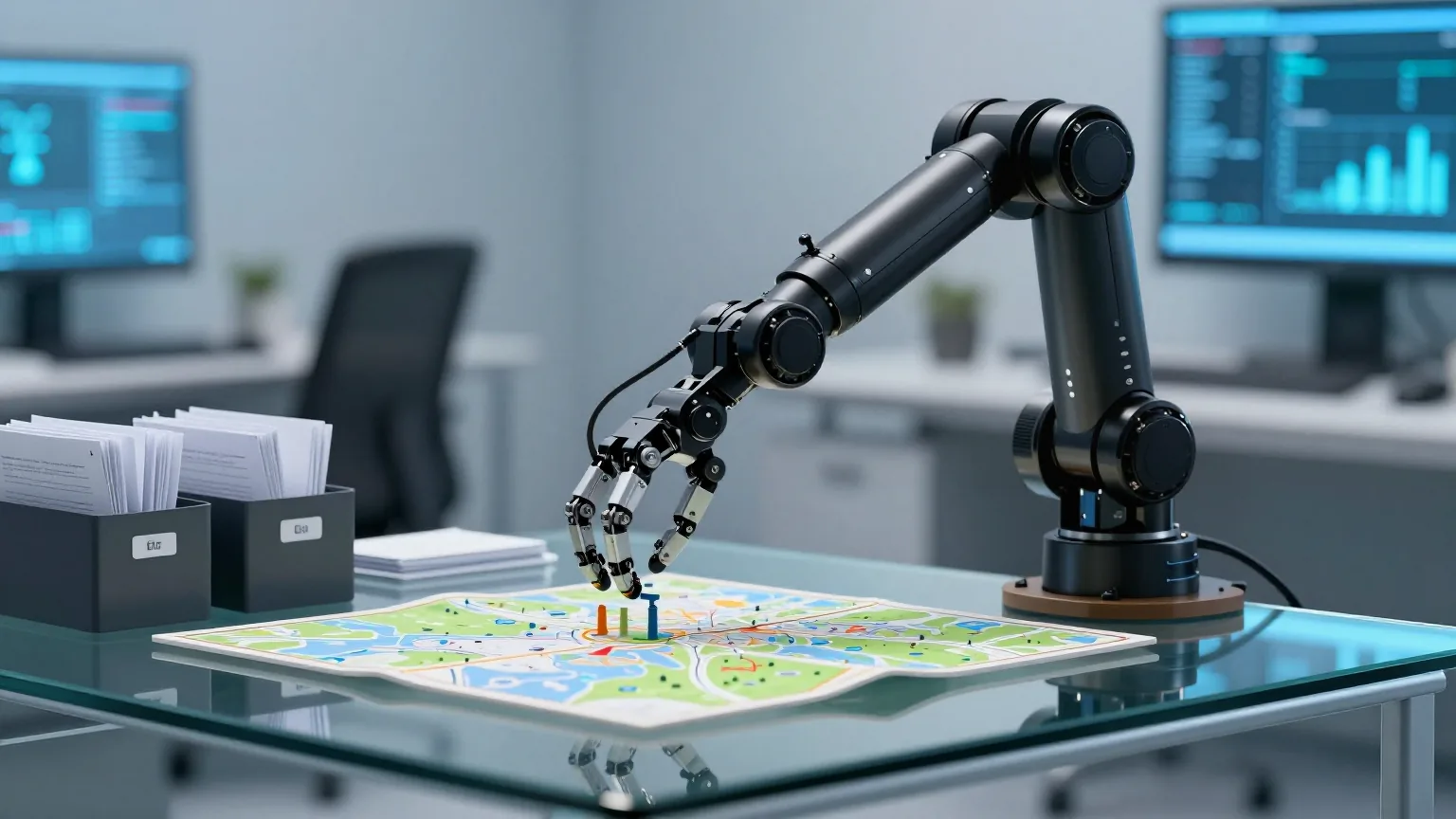
Remember the first time you used a chatbot? You probably typed a query, waited for a text response, and then manually copied that text into another application. It was like having a very fast, but strictly passive, librarian. You asked, they answered, and you did the work. In 2024, that model dominated. But if you look at the landscape of AI tools in 2026, you might feel a bit of déjà vu, except it’s the déjà vu of seeing a horse-drawn carriage. The chat interface is still there, but it is no longer the engine. It is merely the dashboard.
Today, the definition of an "AI tool" has fundamentally shifted. An AI tool is no longer just a software application that uses artificial intelligence technology to solve problems and perform certain tasks in a reactive manner [1]. It is an autonomous entity. It is a digital employee. The industry has moved from "generative AI" to "agentic AI," and the distinction is the difference between a calculator and a accountant. The calculator gives you the sum; the accountant understands the tax code, prepares the form, files it, and emails you the receipt. This shift represents the most significant evolution in software utility since the invention of the graphical user interface.

The Death of the "Copy-Paste" Workflow
For years, the primary value proposition of AI was content generation. You wanted an email? ChatGPT wrote it. You wanted an image? Midjourney created it. But the workflow remained fragmented. The AI provided the raw material, and the human provided the assembly. This "copy-paste" workflow was efficient, but it was brittle. It required constant human supervision to ensure the AI’s output fit the context of the broader task.
In 2026, this friction has been largely eliminated. The top AI tools now operate as autonomous agents capable of executing complex, multi-step tasks without human intervention at every single node [5]. Instead of asking an AI to "write a summary of this article," you instruct an agent to "read this article, summarize it, create three potential headlines, and update our content calendar with the best option." The agent handles the entire lifecycle. It reads, it thinks, it writes, it critiques its own work, and it executes. This is not just speed; it is a change in the unit of work. We are no longer selling tokens or images; we are selling completed outcomes.
Reasoning Models: The Brain Behind the Brawn
How did we get here? The answer lies in the maturation of reasoning models. Early large language models (LLMs) were probabilistic parrots. They predicted the next word in a sequence. They were fast, but they were prone to hallucination and lacked logical depth. By 2026, the industry has standardized on "reasoning models" that "think" before responding [5].
These models utilize a technique often referred to as "chain-of-thought" or "test-time compute." Before generating a final answer, the AI simulates multiple potential paths, evaluates the logic of each, and prunes the weaker options. According to OpenAI’s benchmarks, this approach has reduced hallucination rates by up to 40% [5]. This reliability is the cornerstone of autonomy. You cannot trust an agent to file a tax return or negotiate a contract if it has a 20% chance of inventing a tax law that doesn’t exist. Reasoning models provide the cognitive stability required for autonomous action.
Think of it this way: A standard LLM is like a student who guesses the answer immediately. A reasoning model is like a student who pauses, sketches out the problem on scratch paper, checks their math, and then writes down the final answer. In a business context, that pause is the difference between a tool you can use and a tool you can trust.
The Democratization of Complexity
One of the most exciting aspects of the 2026 AI landscape is the democratization of these powerful capabilities. In the past, building an autonomous agent required a team of machine learning engineers, massive compute resources, and a deep understanding of reinforcement learning. Today, the barrier to entry is remarkably low.
Platforms have emerged that allow non-technical users to define agent behaviors through natural language prompts and simple logic blocks. This "low-code" or "no-code" approach to agentic AI means that a marketing manager can build an agent that monitors social media sentiment, drafts responses to negative comments, and escalates severe issues to human staff, all without writing a single line of Python [5].
This shift has profound cultural implications. It suggests that the value of human expertise is moving away from "how to do a task" and toward "how to define the task." The ability to articulate a goal clearly is becoming more valuable than the ability to execute the mechanics of that goal. We are seeing a "prompt engineering" renaissance, but this time it is less about tricking the AI into saying the right thing and more about designing robust workflows that the AI can navigate autonomously.
Case Study: The Autonomous Marketing Team
To understand the practical impact, let’s look at a hypothetical mid-sized e-commerce company in 2026. In 2024, their marketing team spent 60% of their time on repetitive tasks: resizing images for different platforms, writing product descriptions, scheduling posts, and analyzing basic engagement metrics.
In 2026, they deployed a suite of specialized agents.
- The Creative Agent: Monitors product inventory changes. When a new item is added, it generates high-fidelity product descriptions, creates social media captions in the brand’s voice, and generates visual assets using integrated image generation tools [2].
- The Distribution Agent: Takes the approved assets and schedules them across Instagram, LinkedIn, and X. It uses real-time data to determine the optimal posting time for each platform, adjusting for local time zones and historical engagement peaks.
- The Analytics Agent: Continuously monitors performance. If a specific type of content underperforms, it analyzes the metadata to identify the cause (e.g., image aspect ratio, caption length) and suggests adjustments to the Creative Agent for future iterations.
The human team’s role has changed. They no longer post; they curate. They review the agent’s strategic decisions, approve high-stakes campaigns, and focus on creative vision and brand storytelling. The result? The team produces three times the content with half the headcount, but more importantly, they are freed to do the high-value work that actually drives brand loyalty.
Security and Trust: The New Frontier
With great power comes great responsibility, and with autonomous agents comes great risk. If an AI can execute tasks, it can also make mistakes. And unlike a chatbot that just says the wrong thing, an autonomous agent can do the wrong thing. It can send the wrong email, delete the wrong file, or spend the wrong budget.
This has led to the rise of "Agent Security" as a distinct field. By 2026, enterprise AI tools are built with granular permission structures. An agent might have read access to the entire company wiki, but write access only to a specific folder. It might have the ability to send emails, but only to pre-approved domains. This "least privilege" principle, borrowed from cybersecurity, is now standard in agentic frameworks [3].
Furthermore, there is a growing emphasis on "auditability." Every action taken by an agent is logged with a full chain of reasoning. If a mistake occurs, the company can look back at the "thought process" to see why the agent made that decision. This transparency is crucial for regulatory compliance. Industries like healthcare and finance, which are heavily regulated, are adopting these agents only because they can prove that the AI’s actions were logical, compliant, and within defined boundaries.
The Economic Impact: From Labor to Leverage
The shift to autonomous agents is not just a technical upgrade; it is an economic paradigm shift. For decades, the cost of intelligence was tied to human labor. You needed more people to do more work. Now, intelligence is a scalable resource.
Consider the cost of customer support. In 2024, a chatbot could handle simple FAQs, but complex issues required human agents. In 2026, an autonomous support agent can handle the entire lifecycle of a complex issue. It can diagnose the problem, access the customer’s account history, apply a refund according to policy, and even follow up with a satisfaction survey. The human agent steps in only for edge cases or emotional de-escalation.
This doesn’t necessarily mean mass unemployment, but it does mean a restructuring of roles. The "support specialist" becomes a "support experience designer." The "data analyst" becomes a "data strategy lead." The job is not gone; it is elevated. The repetitive, rule-based parts of the job are automated, leaving the human to handle the ambiguous, creative, and empathetic parts that AI still struggles with.

Some economists argue that this will lead to a "productivity super-cycle," where companies can achieve exponential growth with linear increases in headcount. Others warn of a "digital divide," where companies that can effectively deploy these agents will pull away from those that cannot. The latter view is gaining traction. In 2026, the competitive advantage is not just having AI; it is having effective AI. It is the difference between owning a car and knowing how to drive it on a racetrack.
Collaborative Intelligence: Humans and Agents as Partners
A common misconception is that autonomous agents are meant to replace humans. In reality, the most successful implementations of 2026 AI tools are based on collaboration. The best agents are designed to be "co-pilots" rather than "autopilots."
Imagine a software developer working with a coding agent. The developer defines the architecture and the core logic. The agent writes the boilerplate code, generates unit tests, and identifies potential security vulnerabilities. The developer reviews the agent’s work, refines the logic, and handles the complex algorithmic challenges. The agent handles the toil; the developer handles the thought.
This collaboration is seamless because the communication is bidirectional. The agent can ask the developer for clarification if the requirements are ambiguous. The developer can override the agent’s decisions if the context is misunderstood. This "human-in-the-loop" approach ensures that the system remains robust and aligned with human intent. It is a dance, not a dictatorship.
Moreover, these agents are learning from human feedback. In many platforms, when a human corrects an agent’s output, that correction is fed back into the model’s fine-tuning process. This means that the agent becomes more aligned with the specific company’s culture and standards over time. It is not just a generic tool; it is a customized employee that grows with the organization.
The Role of Multimodal Intelligence
Autonomous agents in 2026 are not limited to text. They are multimodal. They can see, hear, and speak. This opens up new frontiers for automation.
Consider a logistics company. An autonomous agent can monitor live video feeds from warehouses. If it detects a package that is damaged or mislabeled, it can flag the issue, generate a report, and notify the customer service team. It can also listen to audio logs from drivers and transcribe them into structured data for route optimization.
Similarly, in healthcare, agents can analyze medical images (X-rays, MRIs) to provide preliminary diagnoses, which are then reviewed by doctors. They can listen to patient interviews to extract key symptoms and update the electronic health record automatically. This multimodal capability allows agents to interact with the physical world in a more natural and comprehensive way. They are not just processing data; they are perceiving reality.
This convergence of vision, audio, and text processing is what makes these agents truly "autonomous." They can operate in environments where structured data is not available. They can interpret the messy, unstructured nature of the real world and convert it into actionable insights.
Ethical Considerations and the "Black Box" Problem
As these agents become more complex, the "black box" problem becomes more pronounced. Even with reasoning models, the internal logic of a deep neural network is not fully transparent to humans. We know the input and the output, but the exact path of reasoning is often opaque.
This raises ethical questions. If an agent makes a decision that results in a negative outcome, who is responsible? The developer of the model? The company that deployed it? The human who supervised it? In 2026, legal frameworks are beginning to address this, but they are still evolving.
There is also the issue of bias. If an agent is trained on historical data, it may inherit historical biases. For example, a hiring agent might favor candidates from certain backgrounds if the historical data reflects that preference. Mitigating this bias requires constant monitoring and auditing. Companies are now required to conduct regular "bias audits" of their agents to ensure they are making fair and equitable decisions. This is not just a moral imperative; it is a legal requirement in many jurisdictions.
Furthermore, there is the question of consent. If an agent is interacting with other agents or other users, how do we ensure that these interactions are transparent? If an agent negotiates a price on behalf of a user, does the user know exactly what terms were agreed upon? Transparency in agentic interactions is a critical area of focus for regulators and developers alike.
Looking Ahead: The Next Decade
Where do we go from here? The next few years will likely see the rise of "swarm intelligence," where multiple agents collaborate to solve complex problems. Imagine a team of agents, each specialized in a different domain (legal, financial, technical), working together to launch a new product. They will debate, negotiate, and reach a consensus, much like a human team, but at a speed and scale that is impossible for humans.
We will also see the integration of AI agents into the physical world through robotics. As the cognitive capabilities of agents improve, they will be embedded in robots that can perform physical tasks. This will lead to the automation of manufacturing, construction, and even caregiving.
Finally, we will see a greater focus on "emotional intelligence" in AI. While AI may not feel emotions, it can simulate empathy. Future agents will be better at reading emotional cues in text and voice, allowing them to provide more supportive and human-like interactions. This will be particularly important in fields like mental health, education, and customer service.
Conclusion: Embracing the New Normal
The shift from chat to autonomous agents is not a fleeting trend; it is a fundamental change in how we interact with technology. It is a move from tools that serve us to partners that work with us. The implications are vast, touching every aspect of business, society, and daily life.
For individuals and businesses, the message is clear: adapt or be left behind. The skills that will be most valuable in the next decade are not just technical skills, but the ability to define problems, oversee automated processes, and manage human-AI collaboration. We need to learn how to be "conductors" of these digital orchestras.
So, what should you do next? Start small. Identify a repetitive task in your workflow that is currently done manually. Can you automate it with an agent? Try it. See where it fails. Adjust the prompts. Refine the logic. Learn from the process. The goal is not to replace yourself, but to augment your capabilities. The future belongs to those who can harness the power of autonomous agents to do more, faster, and smarter. The chat is over. The work has begun.