Top 10 AI Tools in 2026: The Definitive Ranking

It is November 2025. Or is it? Wait, the calendar says 2026. The AI landscape has shifted so dramatically in the last few months that what felt like science fiction in early 2025 is now just Tuesday’s afternoon routine. The AI tool landscape in 2026 is vast and overwhelming [3]. We are no longer asking, "Can AI do this?" We are asking, "Which AI does this best, and how fast can it integrate with my existing workflow?"
If you are feeling a bit lost in the sea of chatbots, image generators, and code assistants, you are not alone. The market is flooded with options, from free tier tools to enterprise-grade solutions that cost more than a used car. But here is the good news: the noise is finally starting to settle. We have moved past the "hype cycle" into the "utility cycle." Today, we are cutting through the marketing fluff to bring you the definitive ranking of the top 10 AI tools in 2026. These are the tools that are actually driving value, whether you are a solo creator, a mid-sized business, or a tech giant.

The Evolution: From Chatbots to Agents
To understand the 2026 ranking, we have to look back at the trajectory. In 2023 and 2024, the focus was on generative capabilities. We wanted AI to write emails, draw pictures, and summarize PDFs. It was impressive, but it was passive. The user had to prompt the AI, review the output, and then do the work themselves.
By 2026, the paradigm has shifted to agentic AI. These tools don't just generate; they act. They can navigate your file system, execute code, book meetings, and even negotiate prices within set parameters. This shift is the primary differentiator in our 2026 rankings. A tool that merely "writes" is now considered a commodity. A tool that "executes" is the new king.
Historically, we viewed software as a collection of buttons. You click "Save," and the file is saved. In 2026, software is a collection of goals. You tell the AI, "Save this file to the client folder and send a confirmation email," and it handles the multi-step process. This is the context in which we evaluate the following tools.
1. OpenAI’s Integrated Ecosystem
You cannot talk about AI in 2026 without talking about OpenAI. While the world of AI has diversified, OpenAI remains the heavyweight champion, particularly in its recent push toward "Research & Deployment" [1]. The company has moved beyond the simple chat interface to create a seamless ecosystem where research models are directly deployed into consumer and enterprise products.
One of the most significant developments in late 2025 and early 2026 was OpenAI’s deepening integration with real-world applications. For instance, their partnership with Chip Ganassi Racing highlights a fascinating intersection of high-performance data analysis and creative AI [1]. It’s a reminder that AI is no longer just for tech companies; it’s for everyone, from F1 engineers to graphic designers.
In our ranking, OpenAI’s suite takes the top spot because of its versatility. Whether you need the latest research breakthroughs or a reliable API for your business, OpenAI provides the foundational layer that many other tools rely on. Their recent focus on "Perplexity and Intelligence" suggests a move toward more nuanced, reasoning-heavy models that can handle complex, multi-layered problems [1]. If you are building anything serious, OpenAI is likely in your stack, whether you know it or not.
2. The "Best of Breed" Image Generators
Remember when AI image generation was all about weird hands and six fingers? Those days are long gone. In 2026, image generation is a mature industry. The tools in this category are no longer just for artists; they are for marketers, architects, and product designers.
While specific names like Midjourney and DALL-E 3 have evolved, the 2026 leaders are those that offer precise control. We are looking for tools that allow you to lock in lighting, camera angles, and style consistency across multiple generations. The best tools in 2026 allow you to generate a character, then generate that same character in different poses and environments without the "drift" that plagued earlier models.
For businesses, this means faster prototyping. Instead of spending weeks on concept art, teams can now generate 50 variations of a product design in an afternoon. This has democratized visual storytelling, allowing even small startups to have big-budget visual assets. The key insight here is that consistency is the new metric for success in image generation, not just raw aesthetic quality.
3. Code Assistants That Actually Code
Software development has been transformed more than any other field. In 2026, the average developer uses AI for more than 40% of their daily coding tasks. But the tools have evolved. They no longer just autocomplete the next line of code. They understand the entire codebase.
The top code assistants in 2026 can read your entire repository, understand the architecture, and suggest refactoring opportunities that improve performance or security. They can even write tests for code you wrote months ago. This is a game-changer for legacy systems, where documentation is often poor or non-existent. AI is effectively becoming the "living documentation" for complex codebases.
One of the most interesting facts from recent developer surveys is that AI-assisted coding has not reduced the number of jobs, but it has changed the nature of the job. Developers are spending less time writing boilerplate code and more time on system design and problem-solving. The "junior" developer role is evolving into a "code reviewer" and "AI orchestrator" role. The tools in this category are the most critical for any tech company looking to scale without hiring linearly.
4. Enterprise Knowledge Bases
Every company has data. Most companies have a lot of it. But most companies also have a lot of it trapped in emails, Slack messages, PDFs, and legacy databases. This is where Enterprise Knowledge Base tools shine in 2026.
These tools connect to your company’s data sources and allow employees to ask natural language questions. "What was the Q3 revenue for the European division?" or "Why did we decide to change the logo in 2024?" The AI doesn't just search; it synthesizes information from multiple sources to provide a comprehensive answer.
This has had a profound impact on onboarding. New employees can reach productivity levels in weeks instead of months. They can ask the AI about company policies, historical decisions, and technical details without bothering their colleagues. It’s like having a 24/7 mentor who has read every document the company has ever written. For large organizations, this is not just a convenience; it’s a strategic asset.
5. AI-Powered Customer Support
Customer support was one of the first areas to adopt AI, and it remains one of the most mature. In 2026, AI-powered support is no longer a "chatbot" that frustrates customers. It is a sophisticated agent that can resolve complex issues, process refunds, and even apologize on behalf of the company.
The key to success in this area is seamless handoff. The best tools in 2026 know when they are reaching the limits of their capabilities. If a customer is upset or the issue is too complex, the AI smoothly hands the conversation to a human agent, providing them with a full context summary. This reduces the "repeat yourself" frustration that has been a staple of customer service for decades.
From a business perspective, AI support has dramatically reduced costs while improving customer satisfaction. Customers actually prefer interacting with AI for simple, repetitive tasks because it is fast and available 24/7. They save their emotional energy for the human interactions where empathy is truly needed. This hybrid model is the standard in 2026.
6. Generative Video and Animation
If image generation was the breakthrough of the early 2020s, video generation is the breakthrough of the mid-2020s. In 2026, AI can generate high-quality, consistent video from text prompts. This has opened up new possibilities for filmmakers, advertisers, and content creators.
Imagine writing a script, describing the scenes, and having the AI generate the visual footage. You still need to edit, add sound, and refine, but the production cost has dropped by orders of magnitude. This is democratizing filmmaking in a way that was previously unimaginable. Independent creators can now produce content that looks like it was made with a Hollywood budget.
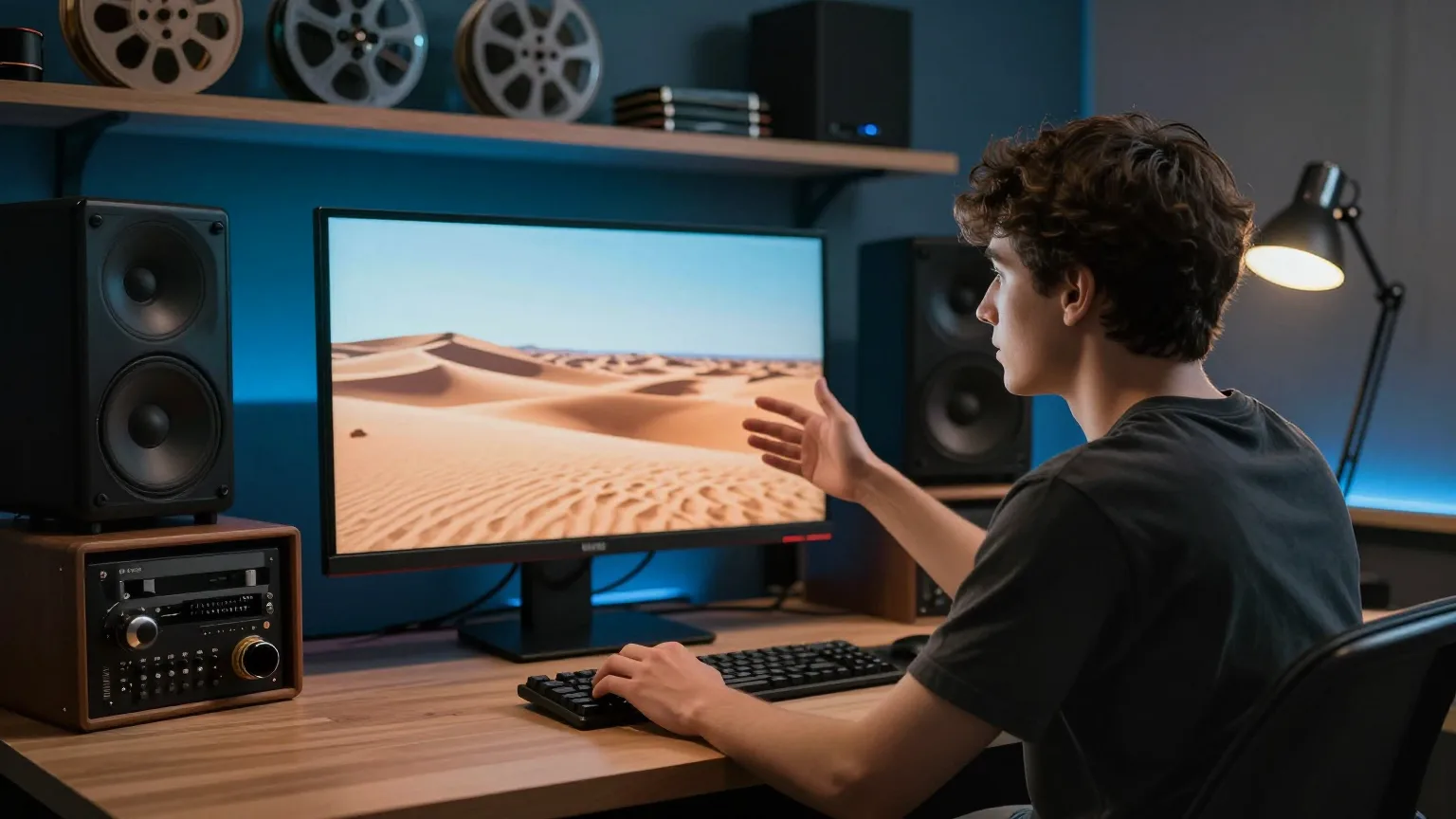
However, there are challenges. Consistency in video is harder than in images. Characters can change appearance between shots. Lighting can shift unexpectedly. The best tools in 2026 are those that offer "character locking" and "scene continuity" features. As these tools mature, we expect to see a surge in AI-generated content in advertising, education, and entertainment.
7. Data Analysis and Business Intelligence
Not everyone is a data scientist. In fact, most business decisions are made by people who have little to no training in statistics. AI-powered data analysis tools are bridging this gap. In 2026, you can upload a CSV file and ask, "What are the trends in customer churn?" The AI will generate charts, identify anomalies, and provide plain-language explanations.
This is a huge shift from traditional BI tools, which required complex setup and SQL knowledge. The 2026 tools are intuitive, visual, and conversational. They allow business users to self-serve their data needs without waiting for the IT department. This has led to a more data-driven culture in many organizations, where decisions are based on evidence rather than intuition.
One of the most interesting insights from this category is the rise of "prescriptive analytics." Instead of just telling you what happened, these tools suggest what you should do next. "Your sales in the Midwest are down 10%. Consider running a targeted promotion for customers in the 30-40 age bracket." This move from descriptive to prescriptive analytics is a major step forward in business intelligence.
8. AI for Creative Writing and Storytelling
Writers have been both excited and terrified by AI. In 2026, the reality is that AI is a powerful tool for creative writing, but it is not a replacement for human creativity. The best tools in this category help with the "grind" of writing: brainstorming, outlining, and editing.
They can generate plot ideas, develop character backgrounds, and even write entire scenes that the author can then refine. This allows writers to explore more ideas in less time. It’s like having a brainstorming partner who never gets tired and has read every book ever written.
However, there is a cultural pushback against "AI slop" in the literary world. Readers can often tell when a story lacks human emotion or nuance. The successful writers of 2026 are those who use AI to enhance their work, not replace it. They use AI for the structural elements and focus their own creativity on the emotional core of the story. This hybrid approach is the key to success in the creative writing space.
9. AI in Healthcare and Diagnostics
While not a consumer tool, AI in healthcare is one of the most impactful areas of development. In 2026, AI is being used to analyze medical images, predict patient outcomes, and even diagnose diseases earlier than human doctors. This has the potential to save lives and reduce healthcare costs.
For example, AI can analyze X-rays and CT scans to detect signs of cancer or other diseases with a high degree of accuracy. It can also analyze patient data to predict which patients are at risk of complications, allowing doctors to intervene early. This is not about replacing doctors; it’s about augmenting their capabilities. Doctors are human, and they get tired. AI doesn’t. It can review thousands of images in a fraction of the time it takes a human, freeing up doctors to focus on patient care.
The ethical implications of AI in healthcare are significant. Issues of bias, privacy, and accountability must be carefully managed. But the potential benefits are enormous. As AI continues to mature in this area, we can expect to see more personalized medicine, where treatments are tailored to the individual patient based on their genetic and environmental data.
10. The "Long Tail" of Niche AI Tools
Finally, we have the "long tail" of AI tools. These are the tools that are not the biggest, but they are the most specialized. They solve specific problems in specific industries. For example, AI tools for legal contract review, AI tools for financial trading, AI tools for architectural design.
These tools are often overlooked in the mainstream conversation, but they are critical for their respective industries. They are deeply integrated into the workflows of professionals, providing value that general-purpose AI cannot. The key to success in this category is domain expertise. The best niche AI tools are built by teams that understand the specific challenges of the industry they are serving.
As the AI market matures, we expect to see more of these niche tools emerge. They will be the ones that drive the most value for specific users, even if they don’t have the broad appeal of general-purpose tools. For professionals, finding the right niche AI tool can be a competitive advantage.
How to Choose the Right AI Tools for You
With so many options, how do you choose? Here are some tips:
- Define Your Needs: What problem are you trying to solve? What are your goals? Be specific. "I want to be more productive" is not a goal. "I want to reduce the time I spend on email by 50%" is a goal.
- Start Small: Don’t try to adopt all 10 tools at once. Start with one or two that address your most pressing needs. Once you are comfortable, you can expand.
- Check for Updates: Is the product actively improving? Tools that shipped meaningful updates in Q1 2026 scored higher in our rankings [3]. AI is moving fast. A tool that was top-tier six months ago may be obsolete today. Look for tools with active development and a strong roadmap.
- Consider Cost: Some tools are free, some are freemium, and some are expensive. Make sure the cost aligns with the value you are getting. For many small businesses, the free tiers are sufficient. For large enterprises, the enterprise plans are worth the investment.
- Test for Integration: Does the tool integrate with your existing workflow? If it requires a lot of manual data entry, it will not be worth the hassle. Look for tools that have APIs and integrations with the tools you already use.
The Future of AI Tools
Where is this all going? In the next few years, we expect AI tools to become even more integrated into our daily lives. They will be less like "apps" and more like "layers" that sit on top of our existing software. You won’t open an "AI app" to write an email; you will just write the email, and the AI will be there in the background, suggesting improvements, checking for errors, and formatting the text.
We also expect to see more personalization. AI tools will learn about your preferences, your style, and your habits, and they will tailor their output accordingly. Your AI assistant will know that you prefer bullet points over paragraphs, that you hate clichés, and that you always want a summary at the end. This level of personalization will make AI tools feel less like tools and more like partners.
There are also ethical and societal implications to consider. As AI becomes more powerful, we need to ensure that it is used responsibly. Issues of bias, privacy, and job displacement must be addressed. We need to have conversations about how AI will affect our society, and we need to put guardrails in place to prevent misuse.
Conclusion: Embrace the Change
The AI tool landscape in 2026 is vast and overwhelming, but it is also full of opportunity [3]. Whether you are a business owner, a developer, a creative, or a student, there is an AI tool that can help you achieve your goals. The key is to find the right tools for your needs and to use them responsibly.
Don’t be afraid to experiment. Don’t be afraid to make mistakes. The AI landscape is changing rapidly, and the tools that are top-tier today may be obsolete tomorrow. But the skills you learn by using these tools—the ability to prompt, to evaluate, to integrate—will remain valuable. So, dive in. Explore the top 10 tools we’ve ranked. Find the ones that resonate with you. And start creating.
The future is not something that happens to us. It is something we build. And in 2026, AI is the most powerful tool we have for building that future. So, what are you waiting for? Time to get to work.
Call to Action: Which AI tool do you think is the most underrated? Which one do you use every day? Share your thoughts in the comments below. Let’s start a conversation about the future of AI and how it is shaping our lives.