Why EU SMEs Are 8x More Likely to Use Agentic AI in 2026
The Great Automation Shift: Why Your Neighbors in the EU Are Running on Autopilot
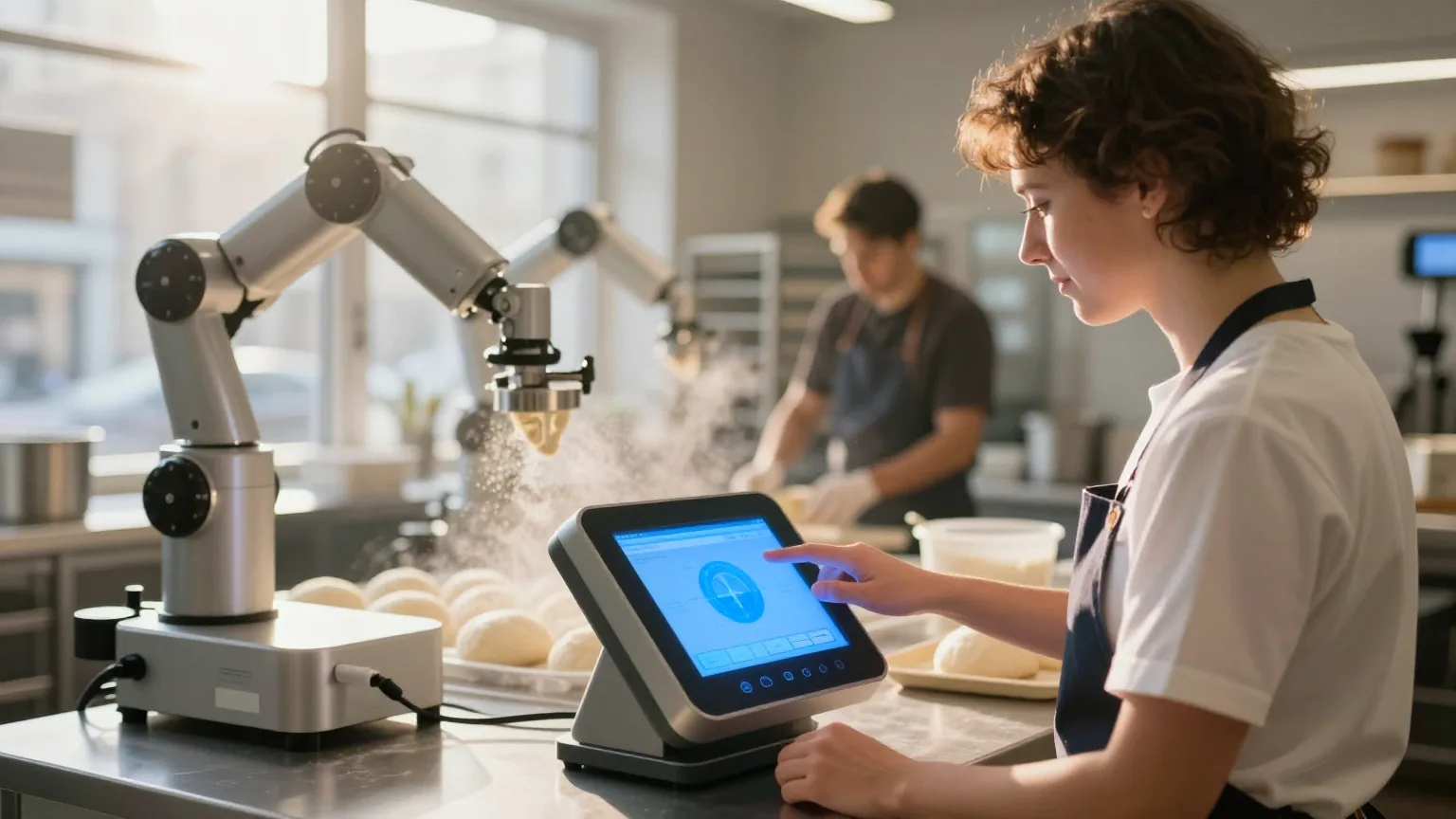
Imagine walking into a local bakery in Rotterdam or a design studio in Barcelona in early 2026. You expect to see humans mixing dough or sketching concepts. Instead, you see a quiet hum of servers and a few staff members interacting with digital interfaces that handle inventory, customer inquiries, and even basic creative drafting with startling efficiency. It’s not science fiction; it’s the new normal. While much of the global tech conversation has been dominated by the massive capital flows of Silicon Valley and the regulatory heavyweights of Washington, a quieter, yet more profound revolution has been taking place in European small and medium-sized enterprises (SMEs).

For years, the narrative was that SMEs were the "long tail" of AI adoption—too small, too cash-poor, and too technologically underserved to keep up with the giants. That narrative is officially dead. In 2026, we are witnessing a phenomenon that can only be described as an agentic explosion. Recent data indicates that agentic AI use among EU businesses is surging, with weekly active users of tools like Codex and ChatGPT Work among EU small and medium businesses growing 8.1x since May 2026 [4]. This isn't just a slight uptick; it is a structural shift in how these organizations operate. Why is this happening now? And more importantly, what does it mean for the future of work in Europe?
Defining the New Frontier: What is Agentic AI?
Before we dive into the statistics, we need to clear up a common misconception. Many people still conflate "AI" with "chatbots." If your AI tool requires you to prompt it for every single step, copy the output, and paste it into another application, you are not using agentic AI. You are using a very fast typewriter.
Agentic AI represents a fundamental leap from assisting to acting. These systems do not just generate text or images; they understand repositories, explain code, generate tests, refactor files, and even complete entire development tasks autonomously [3]. In a business context, an agentic AI doesn't just draft an email; it checks the calendar, verifies the client’s history, drafts the response, attaches the correct invoice, and waits for a simple "approve" click before sending it. It is the difference between having a smart intern who waits for instructions and having a reliable junior manager who takes initiative. This shift has been so significant that it has even made it harder for developers and business owners to choose the right tool, as the market has flooded with options that promise autonomy [3].
The 8.1x Surge: Decoding the Data
The number that is making waves is the 8.1x growth in weekly active users of agentic AI tools among EU SMEs since May 2026 [4]. To put this in perspective, consider that this growth occurred over a period of less than six months. This velocity is unprecedented in the history of enterprise software adoption. Historically, when a new technology like cloud computing or mobile commerce arrived, it took years for SMEs to adapt. The "digital divide" was wide. The gap between the tech-savvy startup and the traditional family-owned business was vast.
But in 2026, that gap is closing at a rate that defies traditional adoption curves. Why? Because the barrier to entry has vanished. It is no longer necessary to hire a team of data scientists or build a custom infrastructure. The tools are ready-made, integrated, and, crucially, accessible. This surge suggests that EU SMEs are not just experimenting with AI; they are integrating it into their core operational DNA. The data points to a region that has moved past the "hype cycle" and entered the "value cycle."
The Regulatory Moat: How GDPR Became a Competitive Advantage
Here is a twist that many tech optimists missed. For years, the General Data Protection Regulation (GDPR) was viewed as a bureaucratic hurdle, a tax on innovation, and a headache for companies looking to scale. Critics argued it would stifle the growth of European tech. However, in 2026, GDPR has ironically become a major competitive advantage in the agentic AI space.
Agentic AI requires trust. If an AI agent is handling sensitive customer data, financial records, or proprietary code, the business owner needs absolute assurance that this data is not being used to train a third-party model or leaked to a competitor. European AI tools and platforms have been built from the ground up with privacy-by-design principles. This has created a "trust premium." EU SMEs, often dealing with local, high-trust relationships, are finding that their domestic AI partners offer the security and compliance they need without the anxiety associated with some non-EU counterparts. The regulation didn't stop innovation; it channeled it toward more robust, secure, and ultimately more usable tools for the enterprise market.
Accessibility for the Masses: The Role of Free Tools
One of the biggest hurdles for SMEs has always been cost. AI was the domain of the wealthy. But in 2026, the landscape has changed dramatically. Major cloud providers and tech giants have realized that to win the SME market, they must lower the barrier to entry to near zero. For instance, Google Cloud now offers a suite of free AI tools for common use cases, including translation, image and video analysis, and speech-to-text [2]. Furthermore, platforms like Google AI Studio provide a fast path for developers, students, and researchers to try models and start building with APIs without immediate financial commitment [2].
This strategy is not about charity; it is about ecosystem lock-in. By allowing SMEs to start for free, these platforms capture the user base early. Once a business builds its workflows around these free or low-cost entry points, the transition to paid, enterprise-grade agentic solutions becomes a natural progression. This has democratized AI in a way that previous generations of technology never did. A small marketing agency in Lisbon can now access the same core capabilities as a multinational corporation, albeit at a different scale.
The Coding Revolution: From Autocomplete to Autonomy
Perhaps the most visible impact of this agentic shift is in software development and digital product creation. AI coding assistants have come a long way, evolving from primitive autocomplete tools to systems that understand entire codebases [3]. For an EU SME, this is a game-changer. Many small businesses do not have the budget to hire a full-time CTO or a large engineering team. In the past, this meant they were stuck with off-the-shelf software that didn't quite fit their needs.
Today, with agentic AI, a small business can describe the functionality they need, and the AI can generate, test, and refactor the code to implement it. This shift has made it harder for developers to choose the best tool, as the options now range from simple syntax helpers to full-stack autonomous builders [3]. But for the non-technical founder, it means that custom software is no longer a luxury. It is a commodity. This is driving a surge in "tech-enabled" services across the EU, where small firms are offering highly customized digital solutions that would have been impossible for them to build a decade ago.
Breaking the Language Barrier: Pan-European Collaboration
Europe is a continent of many languages. For decades, this was a fragmentation factor. A German manufacturer and an Italian supplier struggled to collaborate seamlessly due to language barriers. In 2026, agentic AI is dissolving these linguistic walls. Tools that offer real-time, high-accuracy translation and synthesis are becoming standard integrations in business communication suites [2].

Imagine a procurement officer in Paris negotiating with a supplier in Warsaw. The AI agent doesn't just translate the text; it understands the cultural nuance, the legal implications, and the technical specifications. It can draft the contract in French, generate the summary in Polish, and flag potential compliance issues in both jurisdictions. This is not just a convenience; it is an economic multiplier. By reducing the friction of cross-border collaboration, agentic AI is enabling EU SMEs to scale across the single market with unprecedented ease. The "European" aspect of the EU is no longer just a political concept; it is an operational reality enabled by AI.
The Workforce Transformation: Augmentation, Not Replacement
Let’s address the elephant in the room: job losses. The fear that AI will replace workers is understandable, but the reality in the EU SME sector is more nuanced. The 8.1x growth in agentic AI usage is not correlating with mass layoffs; it is correlating with productivity gains and role evolution. In many cases, the AI is handling the repetitive, low-value tasks—data entry, initial customer triage, basic reporting—freeing up human employees to focus on high-value, creative, and relational work.
For example, a customer service representative at a small e-commerce firm no longer spends hours answering "Where is my order?" questions. The agentic AI handles those inquiries, resolves simple issues, and escalates complex or emotionally charged cases to a human. The human agent then focuses on retention, upselling, and building long-term customer relationships. This shift is changing the job description. Employers are no longer looking for people who can type fast; they are looking for people who can manage AI, interpret its outputs, and handle the exceptions. This is a cultural shift as much as a technological one. It requires a new kind of digital literacy, one that is increasingly becoming a baseline expectation for employment in the EU.
The Economic Ripple Effect: Innovation in the Periphery
Historically, innovation has been centralized in major tech hubs like London, Berlin, or Paris. However, the accessibility of agentic AI is decentralizing innovation. Because the tools are cloud-based and accessible via simple interfaces, a small firm in rural Ireland or a startup in a smaller city in Poland can innovate at the same pace as their counterparts in the capitals. This is creating a more distributed innovation ecosystem across the EU.
We are seeing a rise in "micro-innovations"—small, targeted solutions to specific local problems that are then scaled up using agentic AI for development and deployment. This is fostering a culture of experimentation and risk-taking that is vital for economic growth. It is also challenging the dominance of large conglomerates. A small company can now leverage AI to compete on data insights and operational efficiency, leveling the playing field in ways that were previously unimaginable. The economic ripple effect is significant, contributing to a more resilient and dynamic European economy.
Challenges and Pitfalls: The Honeymoon Is Over
While the data is glowing, we must remain realistic. The rapid adoption of agentic AI has brought its own set of challenges. One of the primary issues is the "tool overload." With so many options available, from ChatGPT and Claude to Gemini and Midjourney, businesses are struggling to choose the right tool that will best support their specific needs [5]. This decision paralysis can lead to inefficiency, as teams spend more time evaluating and integrating tools than actually using them to generate value.
Furthermore, there are concerns about over-reliance. If an SME builds its entire workflow around a single AI vendor, it becomes vulnerable to changes in pricing, policy, or service availability. There is also the issue of "hallucinations"—instances where the AI generates plausible but incorrect information. In a high-stakes business environment, this can lead to costly errors. Therefore, the trend in 2026 is moving toward "human-in-the-loop" architectures, where critical decisions are always verified by a human. This is not a failure of AI; it is a maturation of its use. We are learning to trust, but to verify.
The Future Outlook: 2027 and Beyond
Where does this leave us as we look toward 2027? The trajectory suggests that agentic AI will become as ubiquitous as email or the cloud. The differentiation will no longer be about having AI, but about how it is integrated into the business model. We can expect to see more specialized, industry-specific agentic tools. For example, AI agents designed specifically for the healthcare sector, or for agricultural management, will become standard. These tools will be deeply integrated with local regulations and industry standards, further cementing the advantage of regionally developed solutions.
We will also likely see a rise in "AI literacy" as a core skill in education and corporate training. The EU, with its strong emphasis on education and social cohesion, is well-positioned to lead in this area. Programs that teach not just how to use AI, but how to think critically about its outputs and how to manage the ethical implications, will become standard in universities and vocational schools. This will create a workforce that is not just tech-savvy, but tech-sympathetic and tech-responsible.
Conclusion: The Call to Action for the Curious and the Cautious
The story of EU SMEs in 2026 is not just a story of technology; it is a story of adaptation, resilience, and ingenuity. The 8.1x growth in agentic AI usage is a testament to the fact that when the barriers are removed, businesses will find ways to innovate and grow [4]. It is a reminder that the future of work is not about humans vs. machines, but about humans + machines.
So, what should you do with this information? If you are an SME owner, it is time to audit your processes. Where are the bottlenecks? Where are the repetitive tasks? Start small. Try the free tools available [2]. Experiment with an agentic assistant for a single workflow. See where it helps and where it fails. Don't try to boil the ocean; just take a sip. If you are a developer, look at the tools that can help you build faster and more efficiently [3]. If you are a policymaker, ensure that the infrastructure and education systems are in place to support this transition.
The train has left the station, and it is moving fast. But the good news is that the tickets are affordable, and the destination is a more productive, innovative, and connected Europe. The question is no longer if agentic AI will transform your business, but how you will leverage it to stay ahead of the curve. The future is agentic, and it is here. Are you ready to board?
As we continue to navigate this rapidly evolving landscape, the key is to remain curious, adaptable, and human-centered. The technology will change, but the value of human creativity, empathy, and judgment will only grow. Let’s build a future where AI empowers us, rather than replaces us.