Stop Chatting: Why 2026’s AI Agents Are Doing the Work
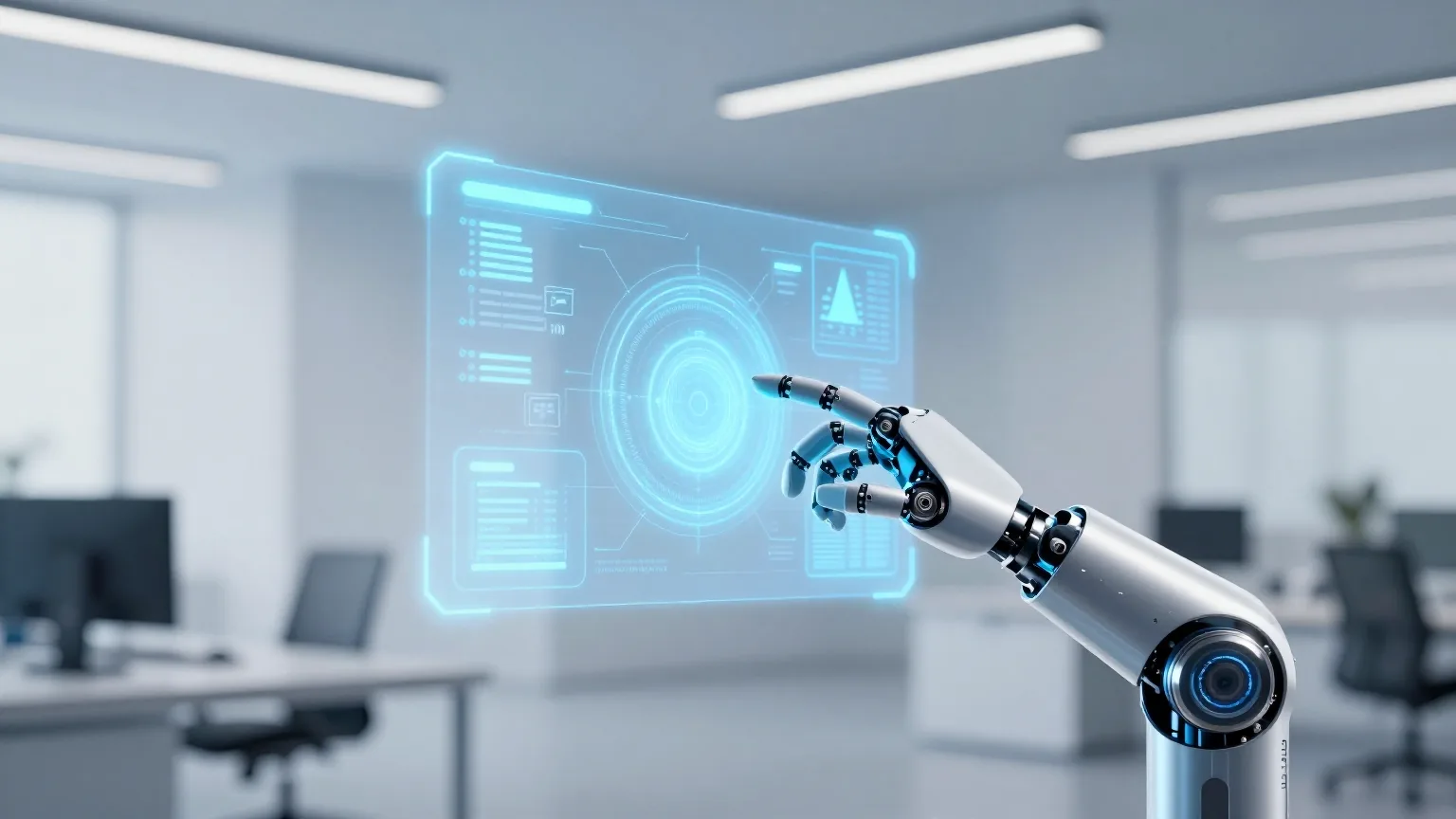
The End of the "Hello World" Era: Welcome to the Age of Action
Imagine a world where you don’t just ask a computer to write an email; you tell it to draft the email, schedule the meeting, update the CRM, and send the follow-up invoice—all before your coffee has even cooled. For years, the narrative around Artificial Intelligence was dominated by a single, somewhat limited interaction model: the chatbot. We typed, it typed back. We asked, it answered. It was a digital parlor trick, impressive at first, but ultimately a passive observer in the workflow.

But in 2026, the dynamic has fundamentally shifted. We are no longer chatting; we are delegating. The landscape of AI tools has evolved from simple text generators into autonomous agents capable of executing complex, multi-step tasks across almost every industry. This is not a sci-fi fantasy; it is the operational reality of the modern enterprise. As one industry analysis notes, the AI tools landscape in 2026 is characterized by a definitive shift from simple chat interfaces to autonomous agents capable of executing complex tasks [5]. This transformation represents more than just a technological upgrade; it is a philosophical change in how humans interact with machinery. We have moved from the role of operator to the role of orchestrator.
From Passive Tools to Active Agents
To understand the magnitude of this change, we must first define what an "AI agent" actually is in the 2026 context. An AI tool is traditionally defined as a software application that uses artificial intelligence technology to solve problems and perform certain tasks [1]. However, the traditional tool waits for a specific command to perform a single action. An agent, by contrast, possesses agency. It can perceive its environment, plan a course of action, execute that plan using various tools, and reflect on the results to adjust its strategy.
Historically, software was deterministic. You gave it input A, and it produced output B. If the path was blocked, the software crashed or errored out. Today’s AI agents are probabilistic and adaptive. They can navigate ambiguity. For example, if an agent tasked with booking a travel itinerary finds that the preferred flight is sold out, it doesn’t just stop. It queries alternative flights, checks hotel availability for the new arrival time, and presents a revised plan to the user for approval, or executes it if pre-authorized. This capability to "think" before responding and act based on that reasoning is the hallmark of the new generation of AI tools [5].
The Rise of Reasoning Models
How did we get here? The breakthrough wasn't just in the amount of data fed to these systems, but in the architecture of their cognition. In previous years, large language models (LLMs) were often criticized for "hallucinating"—confidently stating facts that were entirely false. This was a significant barrier to enterprise adoption. You couldn't trust a tool to handle financial reporting if it might invent a number.
The solution arrived in the form of reasoning models. These systems are designed to "think" before they respond. Instead of generating a single, immediate output, they engage in a chain-of-thought process, breaking down complex problems into smaller, logical steps. According to recent benchmarks, this approach has reduced hallucination rates by up to 40% [5]. This statistical improvement is not just a footnote; it is the foundation of trust. When an AI agent can reason through a legal contract or a medical diagnosis with verifiable logic, it moves from being a novelty to being a reliable colleague. The integration of these reasoning models is one of the three dominant trends defining the 2026 AI landscape [5].
The Democratization of Power
Another critical trend shaping the current era is the democratization of AI. For a long time, building sophisticated AI systems required a team of PhDs in machine learning, massive compute resources, and years of development time. That barrier is rapidly dissolving. The 2026 landscape is seeing the "democratization of AI through low..." [5].
This means that a small business owner, a freelance designer, or a solo researcher can now access the same tier of agentic capabilities as a Fortune 500 company. Tools that once cost millions in infrastructure are now available as scalable APIs or integrated suites. This has leveled the playing field. A two-person startup can now automate its customer support, marketing, and logistics with the same efficiency as a large corporation. The power to automate is no longer exclusive to the tech giants; it is a utility, like electricity or the internet, accessible to anyone with a subscription and a goal.
Case Study: The Autonomous Marketing Team
Let’s look at a practical example to see how this plays out in the real world. Consider a marketing team at a mid-sized e-commerce company. In the past, the workflow was linear and human-heavy. A strategist would come up with a campaign idea. A copywriter would write the emails. A designer would create the visuals. A developer would build the landing page. A data analyst would track the results. This process took weeks and was prone to miscommunication between departments.
In 2026, the workflow has been compressed into hours. The team inputs a high-level goal: "Launch a back-to-school campaign for laptops, targeting university students, with a 15% discount." The AI agent then takes over. It analyzes past campaign data to determine the optimal pricing strategy. It generates copy variations for different segments. It creates visual assets that match the brand guidelines. It builds the landing page using a headless CMS. It schedules the email sequences. It monitors real-time performance and, if conversion rates dip below a certain threshold, it automatically A/B tests new headlines and images.
Human oversight remains, but it is strategic rather than tactical. The marketers review the agent’s plan, approve the creative direction, and monitor the high-level metrics. The grunt work—the repetitive, time-consuming tasks—is handled by the agent. This isn't just about speed; it's about quality and consistency. The agent can test hundreds of variations in the time it takes a human to test one, leading to significantly better outcomes.
Transforming the Coding Landscape
Perhaps no industry feels the impact of agentic AI more acutely than software development. Coding has traditionally been a solitary, high-cognitive-load activity. Developers spend hours debugging, writing boilerplate code, and managing dependencies. Today, AI coding agents have become indispensable partners.
These agents don't just autocomplete lines of code; they understand the entire codebase. They can read a pull request, understand the intent, write the necessary unit tests, identify potential security vulnerabilities, and even suggest refactoring opportunities. Some advanced agents can now take a high-level description of a feature and generate the entire module, including the database schema, API endpoints, and frontend components. The developer’s role shifts from "writer" to "reviewer" and "architect." They focus on system design, edge cases, and business logic, while the agent handles the implementation details. This shift is not only increasing productivity but also improving code quality by reducing human error in routine tasks.
The New Skill Set: Prompt Engineering is Dead, Long Live Context Engineering
With the rise of agents, the skill set required to work with AI has evolved. In 2023, "prompt engineering" was the buzzword. It was the art of crafting the perfect question to get the best answer. In 2026, that skill is largely obsolete. Instead, the focus is on "context engineering" and "goal setting."

Since agents can handle the execution, humans need to be better at defining the context. What are the constraints? What are the brand values? What are the success metrics? The ability to clearly articulate business goals and provide rich context is more valuable than the ability to tweak a prompt. This is a cultural shift in the workforce. Employees are no longer expected to be experts in every tool; they are expected to be experts in their domain and capable of directing AI agents to apply that domain expertise. This requires a new kind of literacy: digital orchestration.
Privacy, Security, and the Trust Deficit
However, this power comes with significant responsibilities. As AI agents are granted access to sensitive data, email accounts, and financial systems, the stakes for security have never been higher. A compromised agent is not just a data breach; it is an active threat that can execute malicious actions. The 2026 landscape is seeing a surge in "agent security" frameworks. These include sandboxed environments where agents can test actions before they are executed in the production environment, granular permission controls, and audit trails that log every decision and action taken by an agent.
Furthermore, the issue of privacy remains paramount. Users must be transparent about how their data is used to train and improve these models. The best AI tools in 2026 are those that offer on-premise solutions or robust privacy guarantees, allowing users to leverage the power of agents without compromising their data integrity [2]. Trust is the currency of the agentic era, and companies that prioritize transparency and security will be the ones that thrive.
The Economic Impact: Productivity vs. Displacement
The economic implications of widespread agentic AI are profound. On one hand, productivity gains are massive. Tasks that used to take days can be done in minutes. This allows businesses to scale without a proportional increase in headcount. On the other hand, there is legitimate concern about job displacement. Roles that are primarily repetitive, data-driven, or rule-based are at risk.
However, history suggests that technology tends to create as many jobs as it destroys, often in unexpected ways. The rise of the personal computer didn't eliminate office workers; it created new roles like IT support, UX design, and digital marketing. Similarly, the rise of AI agents is creating new roles: AI prompters, agent auditors, and human-AI collaboration specialists. The key is adaptation. Workers who learn to collaborate with AI agents will find themselves more valuable, not less. Those who refuse to adapt may find themselves left behind. The focus must shift from "AI will take your job" to "AI will augment your job, and you need to learn how to use it."
Cultural Context: The Automaton Myth
To understand our current anxiety and excitement about AI agents, it helps to look at our cultural history. The concept of the automaton has fascinated humanity for centuries. From the mechanical chess players of the 18th century to the robots in George Orwell’s 1984 or Isaac Asimov’s I, Robot, we have always been captivated by the idea of machines that can think and act independently. These stories often served as cautionary tales, warning us of the dangers of creating entities that surpass human control.
Today, we are living in the reality of those stories. But the narrative is shifting. Rather than a dystopian future of rebel machines, we are seeing a symbiotic relationship. The AI agent is not a master; it is a servant. It is a tool that amplifies human capability. This cultural shift—from fear to collaboration—is essential for the successful integration of these technologies into our daily lives. We are learning to trust the machine, not because it is infallible, but because it is reliable and transparent.
The Role of Multimodal Integration
Another key aspect of 2026’s AI agents is their multimodal nature. Early AI tools were text-only. You typed, it typed. Today’s agents can see, hear, and speak. They can analyze images, interpret video, process audio files, and generate all of these formats. This allows for a much richer interaction. For example, a medical AI agent can analyze a patient’s X-ray, read their medical history, listen to their symptoms described in a voice note, and generate a comprehensive report. An architectural agent can look at a photo of a building, understand the style, and generate 3D models of renovations. This multimodal capability makes agents more versatile and useful in a wider range of scenarios.
Challenges and Limitations
It would be disingenuous to suggest that AI agents are perfect. They still have limitations. They can struggle with highly ambiguous or novel situations that require deep human intuition. They can sometimes get stuck in loops if the task is poorly defined. They require significant computational resources, which can be costly. And they are only as good as the data they are trained on. If the data is biased, the agent’s actions will be biased. Therefore, human oversight is not optional; it is essential. The goal is not to replace humans, but to enhance them. The best workflows are those where humans and AI agents work in tandem, each leveraging their strengths.
The Future: Hyper-Personalization
Looking ahead, the trend is toward hyper-personalization. As AI agents become more sophisticated, they will be able to tailor their actions to the specific needs and preferences of each individual user. Imagine an AI agent that knows your work style, your communication preferences, and your goals. It will proactively suggest tasks, prioritize your inbox, and even schedule your breaks based on your energy levels. This level of personalization will make AI agents feel less like tools and more like partners. They will be the digital concierges of the future, managing the complexities of our professional and personal lives.
Conclusion: Embrace the Orchestrator Role
The era of chatting with AI is ending. The era of delegating to AI is here. The 2026 landscape is defined by autonomous agents, reasoning models, and the democratization of power [5]. These tools are not just solving problems; they are performing tasks, executing plans, and driving outcomes. The businesses and individuals who succeed in this new era will be those who embrace the role of orchestrator. They will learn to define clear goals, provide rich context, and trust the AI agent to handle the execution.
This is not a time to be afraid of technology. It is a time to be excited about the possibilities. The barrier to entry has never been lower, and the potential for productivity has never been higher. The question is not whether AI agents will transform your workflow, but how quickly you will adapt to this new reality. The tools are ready. The agents are waiting. All that is left is for you to stop chatting and start delegating.
Call to Action: Take a look at your current workflow. Identify one repetitive, multi-step task that consumes a significant amount of your time. Research an AI agent that can handle that task. Start small. Define the goal, provide the context, and let the agent do the work. Experience the shift from operator to orchestrator. The future is not just coming; it is already here, and it is working for you.