100+ AI Tools in 2026: The Definitive Q3 Ranking

It feels like a decade ago when we were debating whether artificial intelligence could actually pass the Turing Test. Today, the debate has shifted to something far more practical and, frankly, a bit more overwhelming: which AI tool should you use to get your work done before lunch? The landscape of artificial intelligence in 2026 is not just vast; it is dizzying. With hundreds of new models launching every quarter and thousands of applications built on top of them, the sheer volume of options can paralyze even the most tech-savvy professionals. We are no longer in the era of "discovery"; we are in the era of "optimization."
But here is the good news: you don’t need to know everything. You just need to know the right things. This guide serves as your definitive compass for the third quarter of 2026. We have sifted through the noise, analyzed the latest rankings, and identified the tools that are genuinely moving the needle for productivity, creativity, and code. Whether you are a developer looking for a smarter pair of eyes on your codebase, a marketer needing to generate a month’s worth of content in an afternoon, or a designer pushing the boundaries of visual synthesis, this ranking is curated for you. Let’s dive into the top contenders, the hidden gems, and the strategic shifts defining this year’s AI ecosystem.

The Shift from Chatbots to Agents
One of the most significant cultural and technical shifts in 2026 is the transition from passive chatbots to autonomous agents. In the early days, we asked AI questions and got answers. Now, we give AI goals, and it executes the steps to achieve them. This evolution is central to the current rankings. The "top" tools are no longer just those with the largest language models, but those with the most robust agentic capabilities. According to recent industry insights, the ability to chain actions—searching, writing, coding, and verifying—is what separates the elite tools from the rest [3].
This shift has changed how we think about productivity. It’s no longer about speed of typing; it’s about speed of thinking. The best tools in this Q3 ranking are those that understand context deeply enough to anticipate your next step. For instance, a modern coding agent doesn’t just autocomplete a function; it identifies a bug in a related file, suggests a fix, writes the unit test, and runs the CI pipeline. This level of autonomy is now the baseline expectation for enterprise-grade AI, and it is a primary factor in how we have weighted our rankings for 2026 [5].
The Titans: ChatGPT, Claude, and Gemini
At the pinnacle of the general-purpose AI hierarchy, the "Big Three" continue to dominate. ChatGPT, Claude, and Gemini remain the go-to solutions for a vast majority of users, but their roles have differentiated significantly by 2026. ChatGPT has solidified its position as the all-rounder, excelling in broad utility and integration with a massive ecosystem of plugins. Its strength lies in accessibility and its massive user base, which drives rapid feature updates [5].
Claude, on the other hand, has carved out a niche as the premier tool for long-context reasoning and nuanced writing. For professionals who need to analyze hundreds of pages of legal documents, financial reports, or technical manuals, Claude’s ability to maintain coherence over long distances is unmatched. It is the tool of choice for researchers and analysts who require depth over breadth [5]. Meanwhile, Gemini has become the powerhouse for multimodal integration, seamlessly bridging text, image, and video. If your workflow involves heavy media processing or requires tight integration with cloud infrastructure, Gemini’s architecture offers a distinct advantage [6].
Code and Development: The Rise of Cursor
For developers, the conversation in 2026 is less about "code completion" and more about "co-pilot evolution." While GitHub Copilot remains a staple, Cursor has emerged as a favorite among those seeking a deeper, IDE-integrated experience. Cursor is not just a plugin; it is a full-featured IDE built on top of VS Code, designed specifically for AI-first workflows. It allows developers to chat with their entire codebase, refactor complex logic with natural language, and debug issues with unprecedented ease [5].
The impact of tools like Cursor on software development cannot be overstated. It has lowered the barrier to entry for full-stack development, allowing junior developers to produce senior-level code with AI assistance. However, it also raises questions about code quality and maintainability. The best practices in 2026 emphasize "AI-assisted review," where developers treat AI-generated code as a draft that requires rigorous human validation. This cultural shift in development teams is one of the most interesting side effects of the current AI boom [2].
Image Generation: Beyond Photorealism
In the realm of visual arts, the focus has shifted from mere photorealism to stylization and consistency. The days of generating a single, stunning image that looks nothing like the next one are over. The top image generation tools in 2026 prioritize character consistency and style transfer. This is crucial for industries like film, advertising, and game development, where visual continuity is non-negotiable. Tools that can maintain a specific character’s appearance across hundreds of frames or a campaign’s specific aesthetic are now the industry standard [4].
Furthermore, the integration of image generation with video is becoming seamless. We are seeing tools that can take a static image and animate it with realistic physics and motion, effectively turning a still photo into a short clip. This "image-to-video" pipeline is one of the most trending categories in the AI space right now, driving significant engagement on social media platforms and transforming how creators produce content [6].
Video Synthesis: The New Frontier
Video generation is arguably the most rapidly evolving sector in the AI tool landscape. In 2026, we have moved past the era of "janky" AI videos with morphing faces and nonsensical movements. The latest models can generate high-resolution, coherent video clips from text prompts that last several minutes. This has profound implications for the entertainment industry, where prototyping scenes for movies and TV shows can now be done in hours rather than weeks [2].
However, the challenge remains in control. While the quality has improved, precise control over camera angles, lighting, and specific actions is still difficult. This is why the top video tools in our ranking often come with robust editor interfaces, allowing users to fine-tune the AI’s output. The best workflows in 2026 combine AI generation with human editing, using AI to create the base asset and human editors to polish the final product [4].
Audio and Voice: The End of Text-Only Interaction
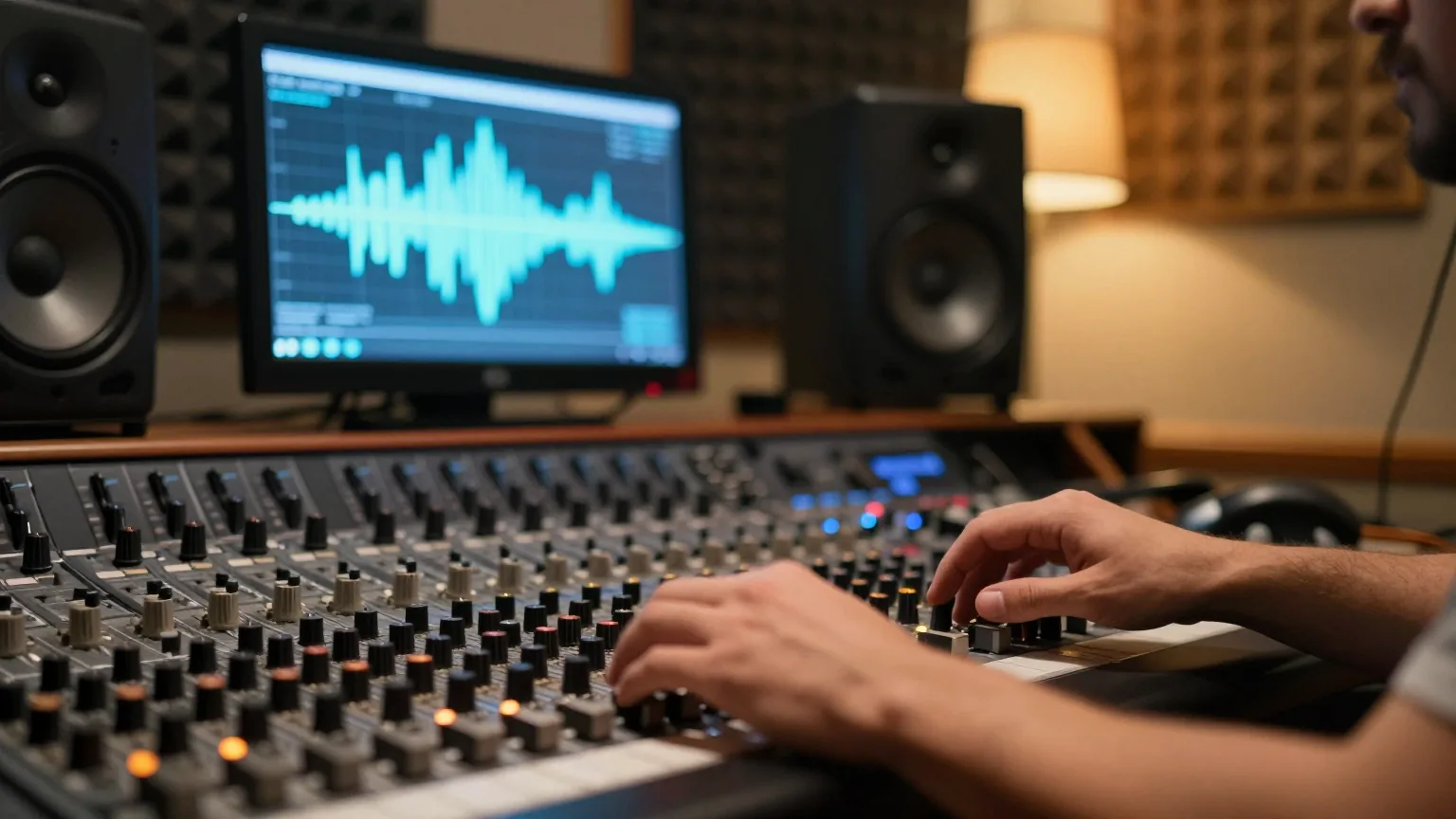
Natural language processing is no longer limited to text. The rise of real-time voice AI has transformed how we interact with these tools. The top text-to-speech and voice cloning tools in 2026 are not just converting text to audio; they are capturing emotion, tone, and cadence. This has applications in e-learning, where interactive tutors can sound engaging and empathetic, and in customer service, where AI agents can handle complex conversations with natural flow [1].
One of the most interesting developments is the use of AI in music composition. Tools that can generate full tracks, including lyrics, melody, and instrumentation, are becoming increasingly sophisticated. While they are not yet replacing human musicians, they are serving as powerful inspiration engines for songwriters and producers. The ability to generate a rough demo of a song idea in seconds allows artists to explore more concepts in less time, accelerating the creative process [2].
Productivity and Workflow Automation
Perhaps the most practical application of AI in 2026 is in workflow automation. The "best" AI tools are often those that integrate seamlessly into existing productivity suites. Tools that can summarize emails, draft responses, extract key data from documents, and update project management boards are becoming essential for knowledge workers. The focus here is on reducing cognitive load. By automating the mundane tasks, AI frees up humans to focus on strategic thinking and creative problem-solving [4].
One notable trend is the rise of "AI scribes" for meetings. These tools not only transcribe conversations in real-time but also identify action items, assign tasks to team members, and follow up with reminders. This eliminates the tedious task of note-taking and ensures that decisions are not lost in the ether of a busy workday. The best tools in this category are those that integrate with popular platforms like Slack, Microsoft Teams, and Zoom, creating a seamless layer of intelligence over our daily communications [5].
Research and Data Analysis
For researchers and data scientists, AI tools have become indispensable partners. The ability to analyze vast datasets, identify patterns, and generate insights that would take human teams weeks to uncover is now a standard feature in many enterprise AI platforms. Tools that can interpret unstructured data, such as social media posts, news articles, and customer feedback, are particularly valuable. They allow businesses to gauge public sentiment and market trends in real-time [2].
In academic research, AI is being used to assist in literature reviews, helping researchers identify relevant papers and synthesize findings from hundreds of sources. This accelerates the pace of discovery and allows scientists to focus on hypothesis testing and experimentation. However, it is crucial to maintain rigorous ethical standards and ensure that AI-generated insights are verified by human experts. The risk of hallucination, where AI generates plausible but incorrect information, remains a significant challenge that requires careful management [3].
The Cost Factor: Free vs. Premium
A common misconception is that the best AI tools are the most expensive. While premium tiers often offer higher limits, faster processing, and access to the latest models, there is a robust ecosystem of free and low-cost tools that are surprisingly capable. Platforms like Free.ai curate hundreds of free AI tools across various categories, allowing users to experiment and find the right fit without a significant financial commitment [1].
For many individuals and small businesses, the free tiers of major platforms are sufficient for daily tasks. The key is to understand the limitations of these free plans, such as data retention policies, usage caps, and access to advanced features. As you scale your AI usage, it may be worth investing in premium subscriptions or enterprise plans. However, for many use cases, a combination of free tools and targeted premium services can provide the best value proposition [1].
Ethics, Bias, and the Human Element
As AI tools become more integrated into our daily lives, the questions of ethics and bias become increasingly important. It is essential to recognize that AI models are trained on data that reflects the biases of the world. This means that AI outputs can sometimes perpetuate stereotypes or produce harmful content. The responsible use of AI requires a commitment to diversity, equity, and inclusion in both the development and deployment of these tools [3].
Furthermore, the role of the human in the loop is more critical than ever. AI should be seen as a tool to augment human capabilities, not to replace them. The most effective workflows are those that leverage the strengths of both humans and AI. Humans bring creativity, empathy, and ethical judgment, while AI brings speed, scale, and data processing power. By working together, we can achieve outcomes that neither could accomplish alone. This collaborative approach is the hallmark of the most successful AI implementations in 2026 [2].
Looking Ahead: What’s Next for Q4 and Beyond?
As we look towards the end of 2026 and into the next year, several trends are likely to shape the future of AI tools. First, we expect to see further convergence of modalities, with tools that can seamlessly switch between text, image, video, and audio. Second, the rise of on-device AI will allow for more private and efficient processing, reducing reliance on cloud servers. Third, we anticipate a greater emphasis on customization, with tools that can be fine-tuned to specific industries and use cases [6].
The pace of innovation is relentless, and what is considered "state-of-the-art" today may be obsolete tomorrow. This is both a challenge and an opportunity. For users, it means staying curious and adaptable. For developers, it means building systems that can easily integrate new models and capabilities. The future of AI is not about a single, perfect tool; it is about an ecosystem of specialized tools that work together to solve complex problems.
Conclusion: Your Action Plan
Navigating the landscape of 100+ AI tools in 2026 can feel like trying to drink from a firehose. But by focusing on the core categories that matter to your work—coding, writing, media, and productivity—you can cut through the noise and find the tools that truly enhance your workflow. The key is to start small, experiment, and iterate. Don’t be afraid to try a few different tools to see what resonates with your style and needs.
Here is your call to action: Identify one repetitive task in your current workflow that is draining your energy. Then, spend the next week exploring the top AI tools in that specific category. Test them, compare their outputs, and see which one integrates best with your existing setup. By taking this deliberate approach, you will not only save time but also gain a deeper understanding of how AI can empower your work. The future of work is collaborative, with humans and AI working side by side. Embrace this partnership, and you will be well-positioned to thrive in the AI-driven world of 2026 and beyond.
Sources
- All Free AI Tools
- Best AI Tools 2026: 100+ Reviewed & Rated - AI Weekly
- Latest AI News, Tools & Industry Insights | Times of AI
- Top 100 AI Tools in 2026 - Most Popular & Trending
- Top 10 Best AI Tools for 2026: Q3 Ranking - DataNorth AI
- Trending AI News Today 2026 — What Is Moving Right Now | AIToolsRecap