From Chatbots to Agents: 5 AI Trends Reshaping 2026
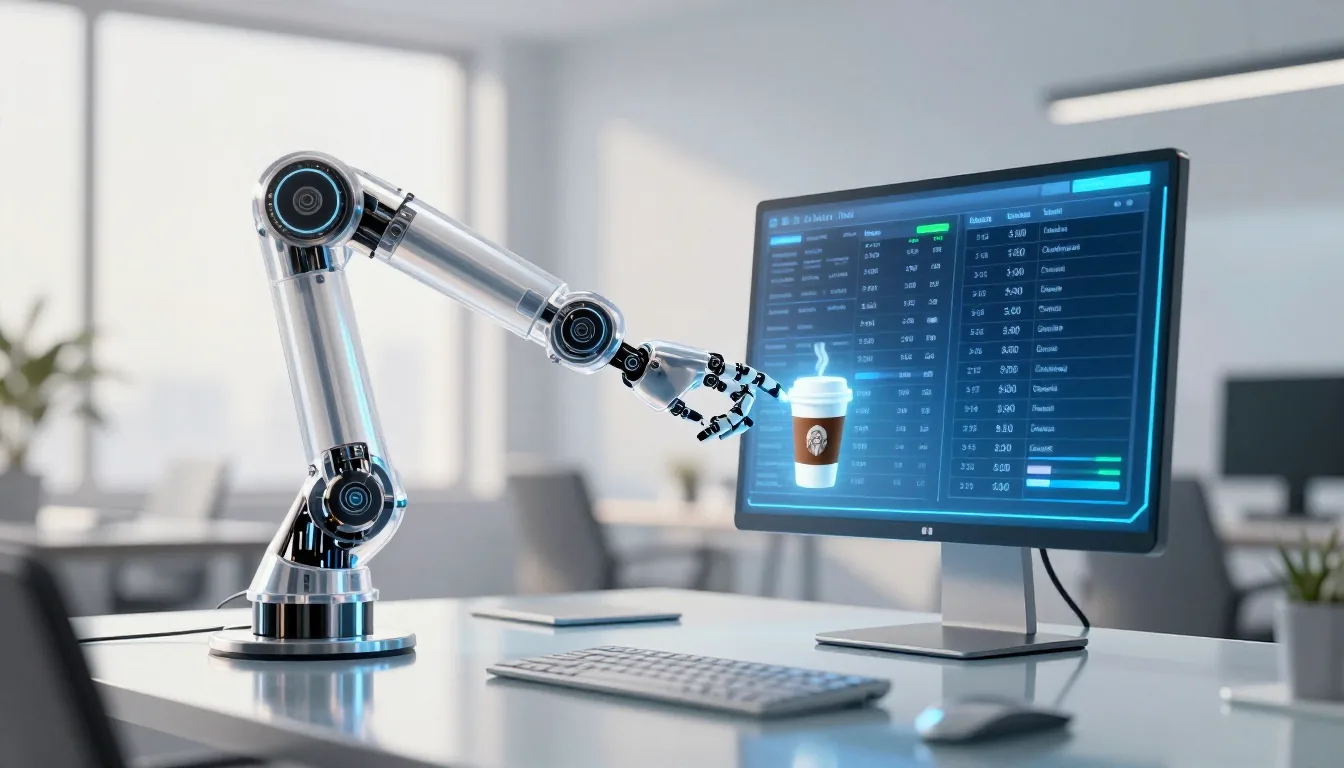
Imagine waking up in 2026 and finding that your digital assistant didn’t just answer your question about the weather, but it also booked your flight, optimized your work schedule to avoid a meeting conflict, and ordered the coffee you usually buy before your morning run. In 2023, that sounded like a scene from a sci-fi movie. Today, it is just another Tuesday.
The landscape of artificial intelligence has undergone a seismic shift. We have moved past the era of simple, reactive chatbots that required constant hand-holding. We are now living in the age of the Autonomous Agent. The question is no longer "Can AI talk?" but "Can AI work?"
As we navigate the latter half of 2026, the AI tools market is more crowded, more capable, and more integrated into our daily lives than ever before. With over 477 free AI tools available across just 20 categories on platforms like Free.ai [1], the sheer volume of options can be overwhelming. But beneath the noise of new model launches and pricing changes lies a clear structural transformation in how we interact with technology.
In this guide, we will explore the five defining trends reshaping the AI tools ecosystem in 2026. From the rise of reasoning models that "think" before they speak to the democratization of enterprise-grade AI, we will break down what is actually moving the needle right now.
The Death of the "Dumb" Chatbot: The Rise of Autonomous Agents
If there is one trend that defines 2026, it is the shift from passive interfaces to active execution. For years, the standard interaction with AI was a back-and-forth dialogue. You asked, it answered. You prompted, it generated. It was a reactive loop.
That has changed. The dominant trend in the AI tools landscape in 2026 is characterized by the shift from simple chat interfaces to autonomous agents capable of executing complex, multi-step tasks [2]. These agents don’t just suggest a solution; they implement it. They can browse the web, write code, test that code, fix bugs, and deploy the application without human intervention at every single step.
This isn’t just a marketing buzzword. It is a fundamental architectural change. Where a 2023 chatbot might have said, "Here is how you can fix this Python error," a 2026 agent says, "I have fixed the Python error, run the tests, and pushed the update to your repository. Here is the log." This shift reduces cognitive load for the user, transforming AI from a tool you use into a partner who works alongside you.
Reasoning Models: When AI Starts to "Think"
One of the most persistent criticisms of early large language models (LLMs) was their tendency to "hallucinate"—to confidently state facts that were entirely false. In 2026, this issue has been significantly mitigated by the widespread integration of reasoning models.
These models are designed to "think" before responding. Instead of generating the next token in a sequence immediately, they engage in a chain-of-thought process, breaking down complex problems into logical steps before formulating an answer. According to OpenAI’s benchmarks, this approach has reduced hallucination rates by up to 40% [2].
For users of AI tools, this means a dramatic increase in reliability. Whether you are using AI for legal research, financial analysis, or medical coding, the output is no longer a gamble. It is a reasoned conclusion. This trend has moved AI from a "creative writing partner" to a "trusted analytical engine," making it viable for high-stakes professional applications that were previously off-limits.
The Democratization of AI: Power in the Palm of Your Hand
Historically, cutting-edge AI was the domain of tech giants and well-funded startups. You needed massive GPU clusters and millions of dollars in training data to compete. In 2026, that barrier has crumbled.
The third major trend is the democratization of AI through low-code and no-code platforms [2]. Today, a small marketing team can build a custom AI agent to handle customer support, or a solo developer can deploy a computer vision model to monitor inventory, all without writing a single line of complex backend code.
Platforms like Free.ai have curated over 477 free AI tools across categories ranging from chat and image generation to text-to-speech and transcription [1]. This accessibility has created a "long tail" of innovation. We are seeing AI tools emerging from niche industries—such as agricultural yield prediction, specialized legal contract review, and personalized healthcare diagnostics—that would have been too small for big tech to prioritize in previous years.
The Multimodal Explosion: Beyond Text
While text-based chatbots got us started, 2026 is the year of multimodality. AI tools are no longer limited to words. They see, hear, speak, and create.
The integration of image, video, audio, and text generation into single, cohesive workflows has become the standard. For example, a content creator can now use an AI tool to generate a script, create a voiceover with realistic emotional inflection, generate accompanying visuals, and edit the video, all within a single interface [5].
This convergence is reshaping creative industries. Filmmakers are using AI to generate storyboard concepts and even full scenes. Musicians are using AI to produce background scores. The barrier to entry for high-quality multimedia content has never been lower. As one recent review noted, the best AI tools in 2026 span writing, coding, image, video, audio, research, and productivity, with 100+ tools now offering robust, integrated features [5].
The Great Consolidation: Choosing Your AI Ecosystem
With hundreds of tools available, users are facing a new problem: choice paralysis. The market is not just growing; it is consolidating. Users are no longer looking for a single "best" tool; they are looking for the best "ecosystem."
Major players like ChatGPT, Claude, Gemini, Grok, Kimi, and DeepSeek are not just offering chatbots; they are building platforms [6]. Each platform is integrating its models into broader suites of productivity tools. For instance, you might use one model for coding because it has the best logic capabilities, and another for creative writing because it has a more nuanced style.
This has led to a new category of tools: AI orchestrators. These are platforms that allow users to route different tasks to different specialized models based on real-time performance metrics. It is a bit like having a personal assistant who knows which department in a company is best for a specific job. This trend reflects a maturing market where users are becoming more sophisticated in their understanding of model strengths and weaknesses.
Privacy and Local AI: The Data Sovereignty Movement
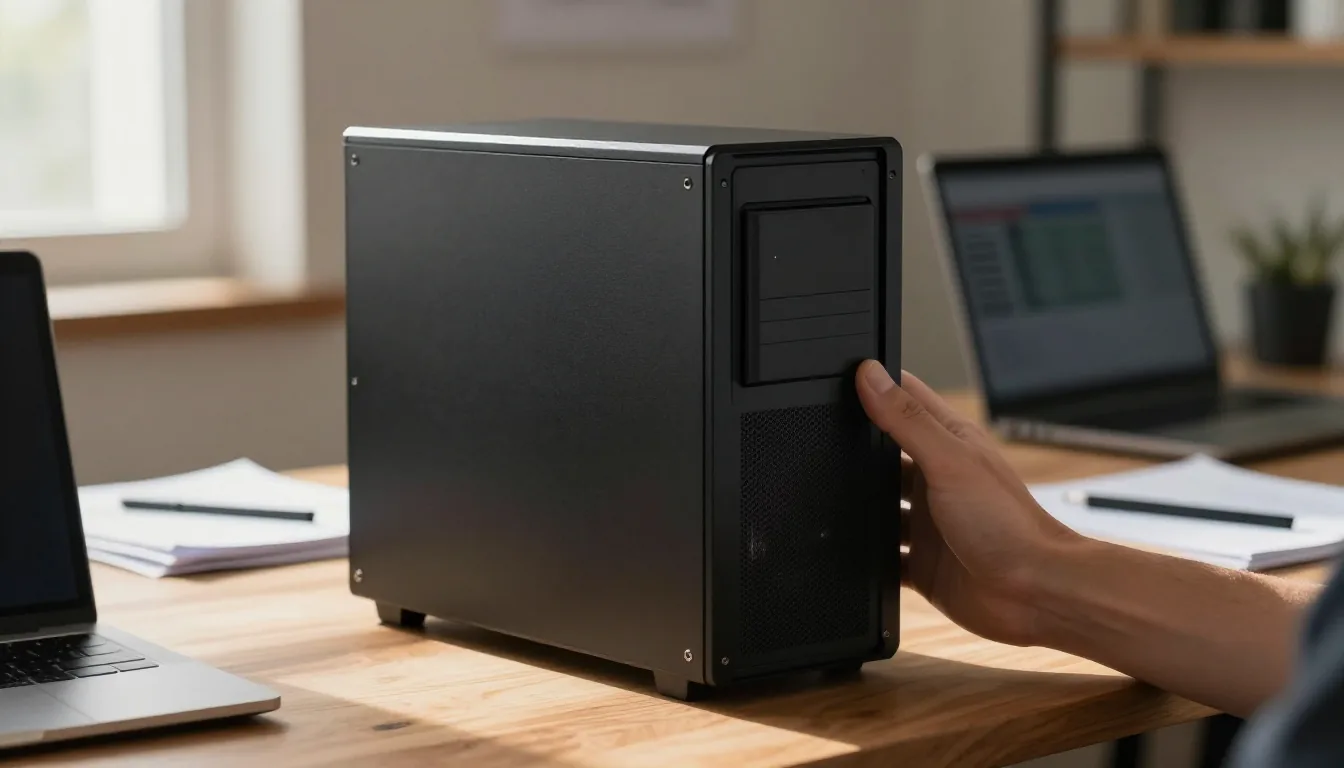
As AI becomes more embedded in our lives, so do concerns about privacy. In 2026, a significant counter-trend to the cloud-heavy model is the rise of local AI.
Advances in hardware efficiency have made it possible to run powerful, reasoning-capable models on local devices—laptops, smartphones, and edge servers. This "local AI" trend is driven by a desire for data sovereignty. Users and businesses want to leverage the power of AI without sending sensitive data to third-party servers.
This is particularly relevant in industries with strict regulatory requirements, such as healthcare and finance. Local AI tools are now able to match the performance of cloud-based models for many common tasks, offering a compelling alternative for those who prioritize security and privacy. The narrative has shifted from "Cloud is better because it’s bigger" to "Local is better because it’s yours."
The Human-in-the-Loop: Augmentation, Not Replacement
There is a persistent fear that AI agents will replace human workers. The reality of 2026 is far more nuanced. The trend is not replacement, but augmentation.
Effective AI tools are designed to work in a "human-in-the-loop" framework. The AI handles the repetitive, data-heavy, or time-consuming parts of a job, while the human focuses on strategy, creativity, and ethical oversight. For example, a lawyer might use an AI agent to review hundreds of contracts and flag potential liabilities, but the lawyer makes the final decision on how to negotiate those clauses.
This collaboration model is reshaping job descriptions. Skills related to "AI literacy"—the ability to prompt, verify, and manage AI agents—are becoming as fundamental as typing or using email. The most successful professionals in 2026 are not those who compete with AI, but those who direct it.
The Economic Impact: New Business Models
The shift to autonomous agents is also creating entirely new business models. In the past, you paid for software licenses or subscription seats. In 2026, we are seeing a rise in "outcome-based" pricing.
Instead of paying for a tool that helps you write code, you might pay for a service that delivers finished code. Instead of paying for a marketing platform, you pay for the leads generated. This shift is possible because AI agents can now measure their own success and deliver tangible results.
This has lower barriers to entry for small businesses. They don’t need to hire large teams; they can contract with AI agents that perform the work of a team. This is democratizing not just the tools, but the capabilities. A one-person startup can now have the operational capacity of a mid-sized firm.
Challenges and Criticisms: The Fine Print
It would be irresponsible to discuss 2026 AI trends without acknowledging the challenges. The rapid pace of development has outpaced regulation in many areas. Issues of bias, copyright, and energy consumption remain significant concerns.
Furthermore, the "hallucination" problem, while reduced, has not been eliminated. Reasoning models are better, but they are not infallible. Users must maintain a healthy skepticism and verify outputs, especially in critical applications. The trend toward autonomous agents also raises questions about accountability. If an AI agent makes a mistake that costs a company money, who is responsible? The user? The developer? The model provider? These legal frameworks are still being written.
There is also the issue of information overload. With so many tools and models, staying current is a full-time job. This is where curated resources like Times of AI and AI Weekly become essential, helping professionals filter the noise from the signal [3, 5].
Looking Ahead: The Next Frontier
As we look toward the end of 2026 and beyond, several emerging trends are on the horizon. The next frontier is likely to be "embodied AI," where digital agents are integrated into physical robots and IoT devices. Imagine your home AI agent not just controlling your thermostat, but physically adjusting it, or your office AI agent cleaning the whiteboard.
We are also seeing the early stages of "world models," where AI doesn’t just process data, but simulates physical and social environments. This could lead to highly realistic virtual training environments for everything from surgery to disaster response.
The pace of change is accelerating. What is considered state-of-the-art today may be outdated in six months. This requires a mindset of continuous learning and adaptation. The tools are changing, but the fundamental goal remains the same: to augment human potential and solve complex problems.
Conclusion: Embracing the Agent Era
The journey from chatbots to agents is not just a technological upgrade; it is a cultural shift. We are moving from a world where we use tools to a world where we collaborate with digital partners. The five trends we’ve explored—autonomous agents, reasoning models, democratization, multimodality, and consolidation—are reshaping how we work, create, and live.
For individuals and businesses, the key to thriving in this new era is not to fear the change, but to embrace it. Start small. Identify a repetitive task in your workflow and see if an AI agent can handle it. Experiment with reasoning models to improve the accuracy of your research. Explore the local AI options to protect your data.
The tools are there. The platforms are ready. The question is: what will you build? The future of work is not about competing with AI, but about directing it. Step into the agent era with curiosity, caution, and confidence. The next chapter of human productivity is being written now, and you hold the pen.
What is one AI tool or agent that has changed your workflow this year? Share your experiences in the comments below. Let’s learn from each other as we navigate this exciting new landscape.