7 Free AI Tools in 2026 That Will Boost Your Productivity

The year is 2026, and if you are still typing out your emails, manually resizing images, or struggling to remember the syntax for a simple Python loop, you are not just being inefficient—you are living in the past. The landscape of artificial intelligence has shifted dramatically over the last few years. We have moved past the "wow" factor of chatbots and entered the era of seamless integration. AI is no longer a novelty; it is the operating system of modern professional life. But here is the catch: the best tools are often the ones you aren’t paying for.
While enterprise-grade AI solutions can cost a small fortune, the free tier of the AI ecosystem has become robust, powerful, and surprisingly sophisticated. Whether you are a developer looking to prototype an app, a student trying to navigate a heavy course load, or a creative professional seeking inspiration, there is a free tool waiting to save your sanity. In this guide, we are breaking down seven essential free AI tools for 2026 that will genuinely boost your productivity. We will look beyond the surface-level features to understand how these tools fit into your daily workflow, drawing on insights from major tech providers and educational institutions.

1. Google AI Studio: The Developer’s Fast Track
If you are a developer, student, or researcher, your first stop in 2026 should be Google AI Studio. It has become the undisputed fast path for anyone who wants to try Gemini models and start building with the Gemini Developer API. Why is this so important? Because it lowers the barrier to entry for complex AI applications to near zero. You don’t need to set up a massive infrastructure or worry about immediate billing cycles to experiment with state-of-the-art language models.
Google AI Studio is not just a chat interface; it is a playground for building. It offers a direct line to the Gemini models, which are known for their multimodal capabilities—understanding text, images, code, and audio simultaneously. For many developers, this is the difference between a weekend project and a stalled idea. By providing a free entry point, Google is encouraging a culture of experimentation. You can test prompts, debug code, and generate content in real-time without the friction of enterprise contracts. It is the digital equivalent of a public workshop where the tools are top-tier and the rent is free.
Historically, accessing cutting-edge AI models required institutional access or significant capital. In 2026, that barrier has been largely dismantled for individual creators. Google AI Studio exemplifies this shift, making high-level AI development accessible to a broader audience. It’s not just about generating text; it’s about building agents and applications that can interact with the world in complex ways, all from a browser tab.
2. U-M Generative AI: Privacy as a Feature
For those in the academic and medical fields, privacy is not just a preference; it is a requirement. This is where the University of Michigan’s Generative AI platform shines. Available to all active faculty, staff, and students across the Ann Arbor, Flint, and Dearborn campuses, as well as Michigan Medicine, this offering includes U-M GPT, U-M Maizey, and the U-M GPT Toolkit. What makes this distinct is its emphasis on being secure, private, equitable, and accessible.
In a world where data leakage is a constant anxiety, knowing that your queries and outputs remain within a secure, institutional environment is invaluable. U-M GPT and its siblings are designed to support learning and research without the fear of proprietary data being used for training public models. This is a critical distinction for researchers handling sensitive data or students working on confidential projects. It represents a mature approach to AI adoption in higher education, where the focus is not just on capability, but on trust and ethical deployment.
The inclusion of "U-Maizey" also signals a move toward branded, institution-specific AI assistants that can be tuned to the specific needs of a community. This trend is growing in 2026, with more universities and organizations creating bespoke AI environments that reflect their values and data security standards. For those in academia, this is not just a productivity tool; it is a compliance tool.
3. ASU’s Approved AI Catalog: Curated for Confidence
One of the biggest challenges in 2026 is the sheer volume of AI tools available. It is easy to get lost in a sea of options, each claiming to be the best. Arizona State University (ASU) addresses this by offering an evolving catalog of ASU-approved AI tools. This page helps users explore the AI tools available through the university, understand who can use them, and learn how to get started. It is a masterclass in curation.
By vetting tools for learning, teaching, research, and daily work, ASU provides a layer of confidence that is hard to find elsewhere. When an institution approves a tool, it implies that the tool has been evaluated for reliability, safety, and alignment with educational goals. This is particularly useful for educators who need to ensure that the tools they introduce to students are pedagogically sound and ethically responsible. The ASU catalog serves as a roadmap, guiding users away from potentially harmful or low-quality tools and toward those that have proven their worth in a rigorous environment.
This approach reflects a broader cultural shift in 2026: the move from "wild west" AI adoption to structured, institutional integration. It acknowledges that not all AI is created equal, and that context matters. A tool that works well for creative writing might not be suitable for medical research or legal analysis. By providing a curated list, ASU helps users make informed decisions, saving time and reducing the risk of using inappropriate tools.
4. The Big Players: ChatGPT and Claude
We cannot discuss AI productivity in 2026 without mentioning the titans of the industry: ChatGPT and Claude. These two platforms continue to dominate the conversation, not just because of their capabilities, but because of their versatility. They are the Swiss Army knives of the digital age, capable of handling everything from drafting emails to analyzing data, from writing code to brainstorming ideas. Their free tiers, while sometimes limited in terms of model access or usage volume, remain robust enough for most individual users.
ChatGPT has become synonymous with conversational AI, offering a natural language interface that makes complex tasks feel simple. Its ability to adapt to different tones and styles makes it ideal for writers and marketers. Claude, on the other hand, is often praised for its nuance and depth, making it a favorite among researchers and analysts. The competition between these two giants has driven rapid innovation, with both platforms constantly updating their models to offer better performance, faster responses, and more intuitive interfaces.
In 2026, the difference between these tools is less about basic functionality and more about specialization. ChatGPT may excel in creative tasks, while Claude might be better suited for logical reasoning and long-form analysis. Understanding these nuances allows users to choose the right tool for the right job, maximizing their productivity. Moreover, both platforms have integrated deeply with other software, allowing users to access them from within their existing workflows, further reducing friction and increasing efficiency.
5. Cursor: The Code Editor of the Future
For developers, Cursor has emerged as a game-changer. It is not just an AI assistant; it is a code editor built with AI at its core. Unlike traditional IDEs where AI is an add-on, Cursor integrates AI into every aspect of the coding experience. It can understand your entire codebase, suggest refactors, debug errors, and even generate entire functions based on natural language descriptions. This level of integration significantly reduces the time developers spend on repetitive tasks, allowing them to focus on higher-level architecture and problem-solving.
The impact of tools like Cursor on software development cannot be overstated. It has democratized coding, making it easier for junior developers to contribute to complex projects and for non-developers to build simple applications. By handling the tedious aspects of coding, Cursor allows developers to work faster and with greater confidence. It is a testament to the power of AI to augment human creativity, providing a safety net that catches errors and suggests improvements before they become problems.
In 2026, the line between human and machine in software development is blurring. Tools like Cursor are not replacing developers; they are enhancing them. They are acting as tireless assistants who never get tired, never forget a syntax rule, and are always available to offer a second opinion. This shift is changing the way software is built, making it more accessible and efficient for teams of all sizes.
6. Napkin.ai: Turning Ideas into Visuals
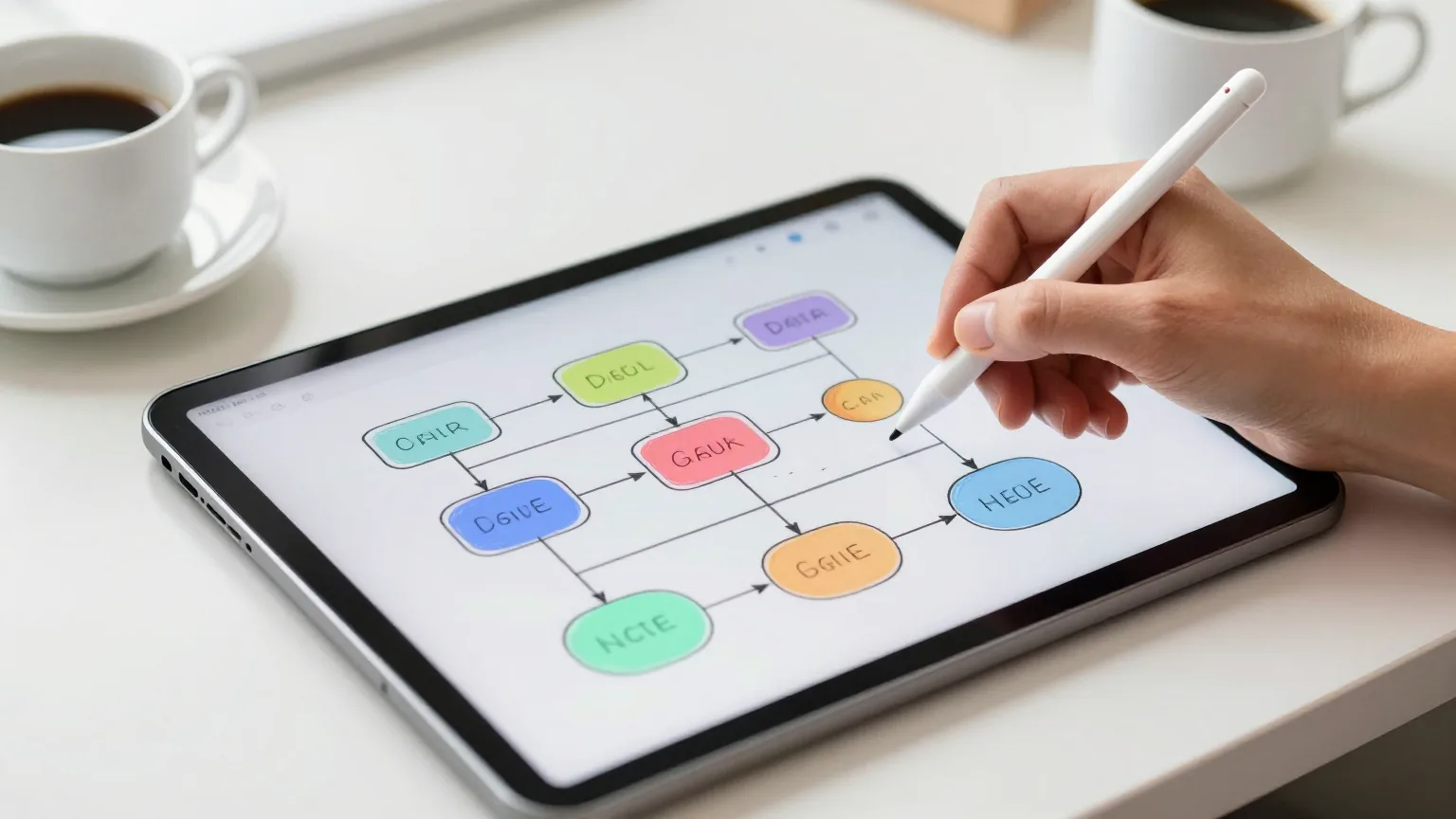
Not all productivity is about text or code. Sometimes, the best way to understand a complex concept is to see it. This is where Napkin.ai comes in. It is a tool that takes your text and turns it into visual diagrams, charts, and graphics. This is incredibly useful for presentations, reports, and explanatory documents. Instead of spending hours in a design software, you can simply paste your text into Napkin.ai and let it generate a visual representation of your ideas.
This is a perfect example of AI bridging the gap between abstract thought and concrete representation. It helps users communicate more effectively by providing a visual anchor for their words. For educators, this is a powerful tool for explaining complex topics. For business professionals, it is a way to make their presentations more engaging and memorable. Napkin.ai demonstrates the versatility of AI in 2026, showing that it is not just about generating text, but about enhancing communication in all its forms.
The rise of visual AI tools reflects a broader trend in communication. In a world saturated with information, visuals are key to capturing attention and conveying meaning. By automating the creation of visuals, Napkin.ai saves time and ensures consistency in style and quality. It is a small but powerful tool that can have a big impact on how you present your ideas.
7. Google’s Free AI Suite: Beyond the Search Engine
Google’s influence on AI extends far beyond its search engine. In 2026, Google offers a suite of free tools for common AI use cases, including translation, image generation, and video processing. These tools are deeply integrated into the Google ecosystem, making them easy to access and use. Whether you are translating a document, generating an image for a blog post, or editing a video, Google’s free AI tools provide a seamless experience.
The integration of these tools into daily life is a testament to the ubiquity of AI. It is no longer a separate application that you have to open; it is a feature that is embedded in the apps you already use. This reduces the cognitive load of switching between tools and allows users to stay in their flow. For example, you can translate a paragraph in a document without leaving your word processor, or generate an image directly in your email client. This level of integration is what makes AI truly productive.
Google’s strategy is to make AI invisible, or at least unobtrusive. By embedding AI into its existing services, Google ensures that its users are constantly interacting with AI, even if they are not consciously aware of it. This is a smart move, as it builds familiarity and trust with the technology. It also creates a network effect, where the more people use Google’s AI tools, the better they become, creating a virtuous cycle of improvement.
The Cultural Shift: From Novelty to Necessity
The adoption of these free AI tools in 2026 reflects a broader cultural shift. AI is no longer seen as a novelty or a threat, but as a necessity. It is as fundamental to modern work as the computer or the internet was in previous decades. This shift has been driven by the rapid improvement of AI models, the reduction of costs, and the integration of AI into everyday tools.
There is also a growing awareness of the ethical implications of AI. As we have seen with the emphasis on privacy in tools like U-M Generative AI and the curation of tools by institutions like ASU, there is a greater focus on responsible AI use. Users are becoming more discerning about which tools they use and how they use them. They are asking questions about data privacy, bias, and the impact of AI on the job market. This is a healthy development, as it ensures that AI is used in a way that benefits society as a whole.
Historically, technological revolutions have been met with resistance and fear. The introduction of the computer, for example, was seen by many as a threat to their jobs. However, over time, the computer became an indispensable tool that augmented human capabilities rather than replacing them. We are seeing a similar pattern with AI. Initially, there was fear that AI would replace writers, coders, and designers. But in 2026, we see that AI is being used to enhance these roles, allowing professionals to do their jobs more efficiently and creatively.
Practical Tips for Maximizing Productivity
While having the right tools is important, how you use them matters just as much. Here are some practical tips for maximizing your productivity with free AI tools in 2026:
- Start Small: Don’t try to integrate AI into every aspect of your work at once. Start with one task, such as drafting emails or summarizing documents, and see how it works. Gradually expand your use of AI as you become more comfortable with it.
- Prompt Engineering: The quality of your output depends on the quality of your input. Spend time learning how to write effective prompts. Be specific, provide context, and ask for examples. This will help you get better results from your AI tools.
- Verify Your Work: AI is powerful, but it is not perfect. Always verify the information generated by AI, especially if it is being used for important decisions. AI can make mistakes, so it is crucial to double-check its work.
- Stay Curious: The AI landscape is changing rapidly. New tools and features are being released all the time. Stay curious and keep an eye on what’s new. This will help you stay ahead of the curve and make the most of the available technology.
- Collaborate: Share your tips and tricks with colleagues. Collaborating with others can help you discover new ways to use AI and improve your workflow. It can also help you learn from their experiences and avoid common pitfalls.
The Future of Free AI
Looking ahead, the future of free AI tools in 2026 and beyond is bright. We can expect to see even more sophisticated models, better integration with existing software, and a greater focus on privacy and ethics. As AI becomes more powerful and accessible, it will continue to transform the way we work and live. The key is to embrace this change, to learn how to use these tools effectively, and to use them responsibly.
The free tier of the AI ecosystem will continue to grow, making it easier for individuals and small businesses to access cutting-edge technology. This will lead to a more innovative and competitive marketplace, as more people are able to experiment with new ideas and bring them to life. It will also lead to a more educated and empowered workforce, as people gain the skills to use AI effectively.
However, it is important to remember that AI is a tool, not a solution. It can help you be more productive, but it cannot replace human creativity, judgment, and empathy. The best results will come from a combination of human and machine intelligence, working together to achieve common goals. By using AI tools wisely, we can unlock new levels of productivity and creativity, and build a better future for ourselves and for society.
Conclusion: Your Move
The world of AI in 2026 is not a distant dream; it is here, and it is free. From the developer-focused Google AI Studio to the privacy-conscious U-M Generative AI, and from the curated catalogs of ASU to the versatile giants like ChatGPT and Claude, there is a tool for everyone. These tools are not just about saving time; they are about enhancing your capabilities, allowing you to do more of the work that you love and less of the work that drags you down.
So, what are you waiting for? The barriers to entry have never been lower. You don’t need a massive budget or a PhD in computer science to benefit from AI. You just need curiosity and a willingness to learn. Pick one tool from this list, try it out, and see how it can fit into your workflow. Start with a small task, and gradually expand your use. You might be surprised at how much more productive you can be.
The future belongs to those who can harness the power of AI. By embracing these free tools, you are not just keeping up with the times; you are getting ahead of them. You are positioning yourself to be more creative, more efficient, and more impactful. So, dive in. Experiment. Learn. And most importantly, start building. The tools are ready, and the future is waiting for you to shape it.